|
|


Last week, we reported that Joe Biden was likely going to issue an executive order to ban future offshore oil and gas leasing projects.
Well, on Monday, Biden did just that, more or less shutting down offshore projects anywhere around the United States.
For example, the entire East Coast is now protected, as are some Alaskan waters and waters in the Pacific Ocean.
Blocking Trump
In all, Biden has blocked future leases on 625 million acres of the Atlantic and Pacific.
And Trump will huff and puff and say he will reverse this ban, there is nothing he can do about it.
Biden issued his order by using the 1953 Outer Continental Shelf Lands Act.
This act gives a sitting president broad authority to protect any lands or waters he or she deems fit. However, the act does not give another president the authority to revoke the order.
Now, I expect Trump to try, but this issue has already been litigated by Trump during his first term, and he lost.
When Biden announced the new order, he stated, “My decision reflects what coastal communities, businesses, and beachgoers have known for a long time: that drilling off these coasts could cause irreversible damage to places we hold dear and is unnecessary to meet our nation’s energy needs.
“It is not worth the risks.”
The only solace for Trump here is that the first challenge was only litigated in the lower courts, so we can take this to the appeals court and the Supreme Court.
The problem, however, is the wording of the law, which clearly gives the president the authority to ban these projects. This court is not likely to loophole a revocation by saying the law does not address the issue.
If that previous rule does hold up, Republicans do not have the numbers in Congress to reverse the ban, so this will stay in place.
The only exception would be to add this to budgetary legislation, where they can use reconciliation to force it through if it passes through the OMB during the review process.
The FBI couldn’t get a single thing done if it weren’t for their trained rats. Ones who get heavy cheese for hard to get inside information. The identities of their confidential informants may have been revealed by the big AT&T hack attack. That’s not a good thing.
One of the datasets looted from AT&T by hackers included FBI call logs. Ones that “could unravel investigations and jeopardize lives.”
On Thursday, January 16, “alarming new details” confirm that the Federal Bureau of Instigation “handed criminals a road map” to their rats.
Outgoing FBI officials pulled the alarm buzzer on their way out the door. They’re finally admitting that “last year’s AT&T system breach likely led to the theft of months’ worth of call and text records tied to federal agents.”

Incoming Director Kash Patel is going to have his hands full protecting the physical safety of bureau informants. That should keep him distracted from digging into the Deep State for a while.
Thanks to the negligent oversight of Christopher Wray, the FBI allowed “all” their devices to be hacked. The intruders got in through AT&T’s “public safety service.” The public doesn’t feel real safe.
The breach “exposed agents’ phone numbers and the numbers they contacted.” Chris is breathing a heavy sigh of relief that “the content of communications” wasn’t included. What the hackers did get is bad enough.
The biggest thing FBI officials are afraid of is the near certainty that “the stolen data could be used to identify investigators’ sources.”
The phone company was attacked all the way back in April of 2022 but the instigators waited until mere hours before the transition of federal power to clue everyone in.
In July of that same year, AT&T verified “that the attack had compromised data from approximately 109 million customer accounts.” They didn’t bother to mention that the FBI was one of those customers. Neither did the bureau.

“The stolen records included detailed logs of calls and texts from that year, underscoring the breach’s massive scale.” Everyone is wondering who else was on that customer list at the time.
The bureau takes the welfare and safety of their embedded informants seriously, they claim as the honchos turn it into somebody else’s problem.
“The FBI has a solemn responsibility to protect the identity and safety of confidential human sources, who provide information every day that keeps the American people safe, often at risk to themselves.” Kash Patel isn’t happy to have that hot potato dropped in his lap.
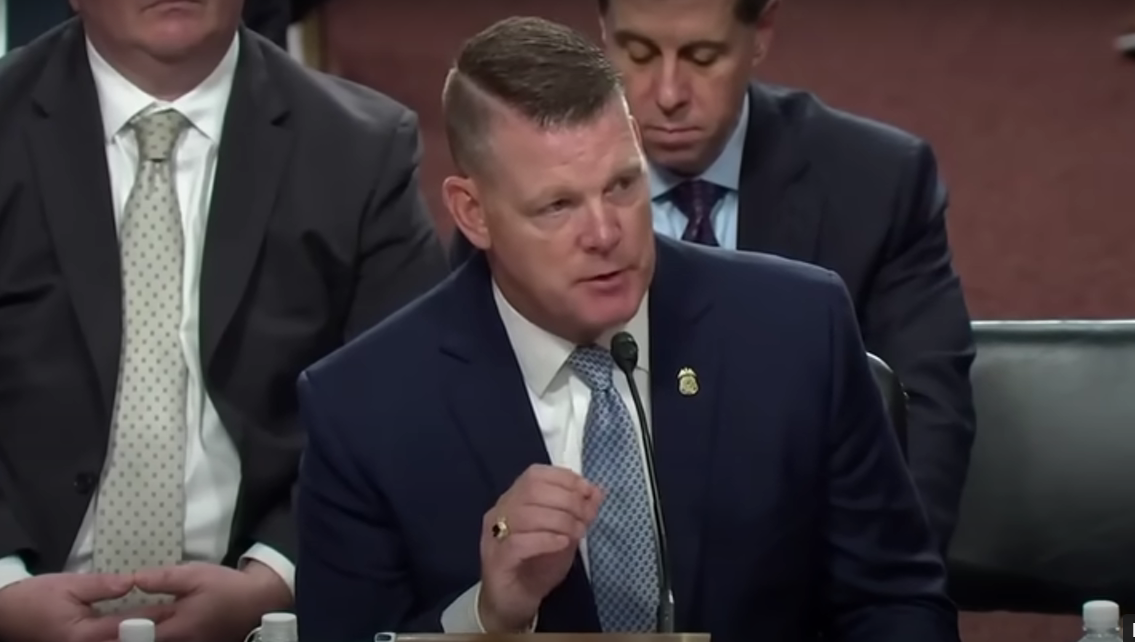
Sen. Josh Hawley (R-MO) broke the news in a letter sent to Rowe, which quickly went viral on social media.
“A whistleblower has alleged to my office that the Secret Service Counter Surveillance Division (CSD), the division that performs threat assessment of event sites before the event occurs, did not perform its typical evaluation of the Butler site and was nor present on the day,” Hawley wrote in the letter.
The Missouri Republican went on to note that the whistleblower had asserted that the assassination attempt would have been quickly foiled if these agents were on site.
“This is significant because CSD’s duties include evaluating potential security threats outside the security perimeter and mitigating those threats during the event,” the letter continued. “The whistleblower claims that if personnel from CSD had been present at the rally, the gunman would have been handcuffed in the parking lot after being spotted with a rangefinder.”
Hawley then revealed that the whistleblower directly accused Rowe of taking this action that led to Secret Service failures that day — which the acting Secret Service director curiously neglected to mention during his recent testimony before the Senate.
“The whistleblower further alleges that you personally directed significant cuts to CSD, up to and including reducing the division’s manpower by twenty percent,” he wrote. “You did not mention this in your Senate testimony when asked directly to explain manpower reductions.”
Hawley’s letter also included allegations that many threat assessment team agents had been warning Secret Service leadership for some time about potential dangers.
He concluded the letter by demanding that the acting Secret Service director hand over materials related to his “personal involvement in revising, updating, or otherwise changing Secret Service policies and personnel related to CSD,” as well as other records — giving him a deadline of August 8.
This is not the first Secret Service whistleblower related to the assassination attempt, as an email from a Secret Service counter-sniper recently went viral calling out the agency’s leadership for repeatedly failing to enact reforms demanded by on-the-ground agents who have been expressing concerns about potential assassination attempts for years.
“Sadly we have fallen short for YEARS. We just look good doing it. I have conveyed these thoughts to not only supervisors (to include the current Captain of CS, but those responsible for training us (SOTS/CS). Only to be brushed off as those with less experience somehow knew more than me,” the email read, in part.

 Posts
All Comments
Posts
All Comments


