Sunday, March 15, 2015

Two Days before Vote, Israel PM Seeks to Lure Centrists


Two Days before Vote, Israel PM Seeks to Lure Centrists

إقرأ هذا الخبر بالعربية W460
Two days before Israel's election, Prime Minister Benjamin Netanyahu made a last-ditch effort Sunday to garner support by appealing to the center and heading for a mass rally in Tel Aviv.
Israel goes to the polls on Tuesday for the second general election in as many years with pundits unanimous that it is turning out to be a referendum on Netanyahu's six years as premier.
Netanyahu has run a campaign focusing squarely on security issues, arguing he is only one capable of protecting Israel from an Iranian nuclear threat and warning that Israel's security will be at risk if his rivals, the center-left Zionist Union, win.
But on the street, voters have appeared much more concerned by the increasingly unmanageable cost of living and the ongoing housing crisis.
"These elections are not about Iran, Hamas or even the housing crisis. They are a referendum about Benjamin Netanyahu," wrote Ben Caspit in the Maariv daily.
"It seems that the public doesn’t want him anymore. Right wing, left wing — it doesn’t matter. The man has come to the end of the road with us; we’ve come to the end of the road with him."
With the last polls showing a consistent erosion in support for his right-wing Likud party, Netanyahu on Sunday launched a last-ditch charm offensive to lure the support of center-right Kulanu.
And Likud officials confirmed the premier would be addressing an evening rally in Tel Aviv aimed at boosting support for the right.
Ahead of the rally, scheduled to start at 1700 GMT, Netanyahu gave interviews to Israel's two main radio stations in which he said he would be willing to hand the powerful finance portfolio to Kulanu leader Moshe Kahlon.
"I cannot form a government without him. However many seats his party wins, he will get the post of finance minister," Netanyahu told army radio.
A popular former Likud minister, Kahlon -- whose party is forecast to win between eight and 10 seats -- is expected to play the role of kingmaker following Tuesday's vote.
During his tenure as communications minister (2009-2012), Kahlon broke up a years-long monopoly within Israel's mobile phone sector, and his election campaign has focused almost exclusively on economic issues, notably the housing crisis, a key issue for voters.
But Kahlon dismissed the offer as "spin", saying Netanyahu had not made good on promises he made in the past.
"Netanyahu already promised me the position of head of the Israel Land Authority and the finance ministry and didn't keep his word," he wrote on Facebook, referring to the body which oversees land development.
In a poll published in the top-selling Yediot Aharonot on Friday, the Zionist Union was in the lead taking 26 of the Knesset's 120 seats, followed by 22 for Likud.
Under Israel's complex electoral system, the task of forming a new government does not automatically fall to the party that wins the largest number of votes.
The winner -- and next prime minister -- will be the one who can succeed in cobbling together a coalition commanding a parliamentary majority.
Friday's last-minute poll predicted the right-wing and religious bloc would take 56 mandates and the same number for the center-left and Arab parties.
And with Kulanu seen taking eight mandates, Kahlon's decision on who to back is likely to be crucial.
Isaac Herzog, who heads the Zionist Union with former peace negotiator and centrist HaTnuah leader Tzipi Livni ridiculed Netanyahu's latest offer.
"When Bibi goes down in the polls, he ups the lies," he wrote on his Facebook page, recalling Netanyahu's failed ILA promise to Kahlon just before the 2013 election.
"Two days before the 2015 elections, he is panicking again and this time has promised Kahlon the finance ministry, but nobody believes him any more," he wrote.
Speaking to public radio, he acknowledged Kahlon would be "an important partner if I form the next government".
On the ground, right-wing lobby groups were urging supporters to attend the Tel Aviv rally in a bid to increase support for right-wing and religious parties.
One of the organizers, "United Headquarters for the Land of Israel," said the rally could "strengthen the parties which support the continuation of settlement in Judaea and Samaria (the West Bank)" and ensure the election of a government that will "stand bravely against pressure from the rest of the world".
Netanyahu is expected to address the rally at 8:00 pm (1800 GMT) and Naftali Bennett, head of the ultra-nationalist Jewish Home party, is also expected to speak.

Comments 0

New Form of Terror – Toy Drones – Has No Counter Measures

Weekly
Mon March 16, 2015


New Form of Terror – Toy Drones – Has No Counter Measures
DEBKAfile Exclusive Report March 15, 2015, 2:37 PM (IDT)
This report inaugurates debkafile’s new column which, under the heading The Cyber Dimension, will appear regularly and keep our readers abreast of novel events in this fast-developing field. The least appreciated cyber threat today comes from the potential of toy drones reaching terrorist hands. Unidentified UAVs over the White House and Elysée triggered the first alarm. As yet, no counter-measures have been developed capable of diverting or aborting a small drone with a 400-gram explosive payload, after its flight plan, fatal mission and target have been installed in its program.
The American Secret Service is planning a novel kind of exercise for keeping the White House and Capitol Hill safe from intrusive drones. Squadrons of UAVs will swarm over the two sites between 1:00 and 4:00 a.m. for several nights, to test optional methods of protecting sensitive buildings in the country from what has been treated until now as no more than a nuisance.
It was a two-foot long “quadcopter” drone, essentially a sophisticated toy, which crashed onto the White House grounds on Jan. 25, that alerted the Secret Service to the possible dangers those playthings may present their charges, the president of the United States and other symbols of government.
A string of mysterious drones over historical and national sites in Paris has made French police and security agencies jittery.
The US army and navy field the most advanced drones in the world for intelligence, patrol, surveillance and assault missions. These UAVs can stay aloft scores of hours, thousands of kilometers from their home base, while able to navigate independently by instruments programmed before they takeoff. Those instruments lead them to target and then switch them onto performance mode for assault on photography. After completing their mission, the drones are automatically steered back along a different route up until their landing at home base. All these functions are performed without human intervention or remote control.
It is hard to explain how the developers of this highly sophisticated tool neglected to develop parallel means of defense and interception against drones when turned to hostile use. The broad communities of intelligence and security agencies in the US and worldwide, including Israel, appear to have missed out on the most important step, which is to list drones under dual headings: threat as well as a novel strategic tool.
This threat is easily available commercially. Costing between $1,500 and 5,000, depending on the model, anyone can buy a “toy” drone, with a whole range of capabilities, including one that can carry a payload of more than one kilo, has a flight range of up to one kilometer and is able to stay aloft for half an hour.
In the hands of a terrorist, the “toy” drone can take the place of a suicide bomber. Loaded with 400 grams of explosives, an HD video camera and a miniature transmitter, it can broadcast live up until it blows up its pre-assigned target.
To develop counter-measures for a suicide-drone, coordination is necessary among the various arms of government - the army, navy, security and intelligence agencies, the customs department – to exercise a ban on their import, law enforcement agencies, the police and the civilian aviation authority. They would need to push together for new laws and regulations to restrict and oversee the production, import and use of unmanned drones with dangerous capabilities.
The administration will furthermore need to invest whatever sums are necessary for developing the technology to counter a weapon which has almost unlimited potential for wreaking death and destruction of unimaginable proportions, if allowed to get out of control.
The drone that landed in the White House compound and the rash of mystery drones sighted over the historic sites of Paris, including the presidential palace and Eiffel Tower, ought to be wake-up calls. In Washington and Paris, law enforcement and security agencies were helpless to intercept the buzzing intruders and found their operators highly elusive.
Until this danger is seriously addressed, no single remedy exists for stopping destructive drones.
 An electronic fence capable of jamming the frequencies of one type of drone will not work for another. None of these electronic devices can divert or abort an unmanned drone, which is bent on a fatal mission after its flight plan and target were previously installed in its program.
None of the most advanced electronic devices, including laser-guided instruments, are designed to knock out plastic toys weighing a few grams. They are programmed to counter large aerial vehicles with certain heat levels and dimensions.
Until a better solution is found, the only way to guard the White House against one of these unmanned invaders may prove to be a vast nylon net canopy thrown over the buildings to be safeguarded. 

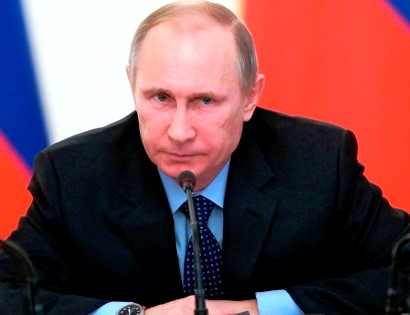
Moscow mystery: Questions persist about Putin’s whereabouts

Moscow mystery: Questions persist about Putin’s whereabouts

Is Putin Alive
Is Putin Alive?

Fox News

The more his people seek to assure the public that Vladimir Putin is just fine, the more speculation swirls that something – a love child, terminal illness or some exotic Kremlin intrigue – is up with the Russian president
Rumors about Putin range from speculation he is sick or even dead to whispers he is about to become a father. Normally in the public eye on a daily basis, Putin has not been seen since March 5, and has canceled several engagements. Three photos released by the Kremlin, of a meeting purportedly held on Friday, only added to the mystery. The pictures showed the Russian strongman meeting and shaking hands with the head of the Russian Supreme Court, but western media darkly noted that the date the photos were taken could not be confirmed. Some noted that a calendar normally seen on his desk, and which would have effectively dated the photos, was missing.
“When the sun comes up in spring, and as soon as spring is in the air, then the fever begins,” Putin’s spokesman, Dmitry Peskov, told reporters Thursday, according to official news agency Tass.
“The information on a baby born to Vladimir Putin is false. I am going to ask people who have money to organize a contest on the best media rumor.”- Dmitry Peskov, Kremlin spokesman
A Swiss newspaper claimed that Putin was recently in Lugano for the birth of his lovechild with his longtime alleged lover, Olympic gymnast Alina Kabayeva. But Preskov insisted that Putin is not a recent papa.
“The information on a baby born to Vladimir Putin is false,” Peskov said, adding, “I am going to ask people who have money to organize a contest on the best media rumor.”
Fueling the speculation was a report Thursday from a Kazakhstan government official who said Putin canceled a visit after he had “fallen ill.” Putin also missed a Thursday meeting of Russia’s annual Federal Security Service, an event he has never skipped.
The website RussiaNews.net noted that “Putin umer” or “Putin has died,” is now trending on the Russian Internet and that a new website that allows users to ask, “has Putin died?”
Peskov told the radio station Echo of Moscow his boss, a Karate black belt known for swimming in icy waters and riding horses bare-chested, is very much alive and as healthy as ever – even claiming his handshake could break bones.
But without an appearance from Putin, there was no shutting down the rumor machine that went into high gear after a recent planned meeting in the Kazakh capital, Astana, with the leaders of Kazakhstan and Belarus was postponed on short notice. On Wednesday, the government issued a photo of a meeting between Putin and the regional governor of Karelia, which may in fact have actually taken place as early as March 5.
Peskov told The Associated Press that Putin has a busy agenda in the coming days, including some international meetings. He said that next week the president is set to make a trip to Kazakhstan, which had been planned for this week but abruptly postponed.
Putin, 62, was last seen in public on March 5, when he hosted Italian Prime Minister Matteo Renzi.
“There is absolutely no reason for any doubts about the state of his health,” Peskov told the AP. “His health is really perfect, everything is OK with him, and he’s working in accordance with his traditionally overloaded working schedule.”
Intrigue has been swirling in the Russian capital since an outspoken critic of Putin, Boris Nemtsov, was killed Feb. 27 by gunmen near the Kremlin. Last week, Russian police arrested five suspects, including an alleged triggerman with close ties to Chechnya’s Moscow-backed leader Ramzan Kadyrov. A day after the arrests were announced, Putin awarded Kadyrov with one of Russia’s highest medals, a move seen as an effort to placate the Chechen strongman.
Peskov said Putin will meet Monday with the president of Kyrgyzstan, an even that, if it happens, will cool down the rumor mill. Until then, Peskov seemed resigned to the fact that the talk  will continue.
“Actually it’s very hard to explain this wave of interest toward the state of his health,” Peskov said. “We do appreciate the care, the global care.”
For more on this story, please click here.

Tags assigned to this article:
Is Putin Dead? Putin


Check Our FeedVisit Us On FacebookVisit Us On Google PlusVisit Us On Twitter

Contact Form

Name

Email *

Message *