What years are millennials? Here's what defines this generation and why.
OLIVIA MUNSON
Updated
Everyone is part of a generation. But which one is yours? From baby boomers to Gen Alpha, each has defining influences and events that dictate the generation's year span.
Millennials fall between Gen X and Gen Z, fittingly giving them the other name –Generation Y. And despite what memes say, there is more to being a millennial than an affinity for side-parts and skinny jeans.
So, here's what you need to know about millennials, such as what years their generation spans and how old they are in 2023.
According to Pew Research Center, the cutoff year was chosen since it highlights the political, economic and social factors that defined the formative years of millennials.
For example, most millennials were old enough to understand the significance of 9/11, unlike Gen Z who were still very young and could not comprehend the attacks when they occurred. Millennials also grew up during the wars in Iraq and Afghanistan.
Additionally, technology impacted millennials since the generation aged amid the internet's rise. For Gen Z, technology is practically second-nature, while millennials had to adapt to the ever-expanding social media and online communication advancements.
Who is Matthew Kacsmaryk, the judge who suspended approval of the abortion pill mifepristone?
KATE MURPHY
Updated
Matthew Kacsmaryk at a Senate Judiciary Committee hearing in 2017; boxes of mifepristone. (Photo illistration: Yahoo News; photos: U.S. Senate via YouTube, Robyn Beck/AFP via Getty Images)
In an unprecedented ruling, a conservative federal judge in Texas on Friday further restricted abortion access nationwide by suspending the Food and Drug Administration’s approval of mifepristone, a widely used abortion drug that was approved over two decades ago.
The judge has decided to suspend the ruling for seven days, giving the Justice Department time to appeal the decision, which leaves the drug available on the market for the time being.
Judge Matthew Kacsmaryk, who was appointed by former President Donald Trump, ruled in favor of the plaintiffs Alliance Defending Freedom, a faith-based organization that has long sought to have abortion outlawed nationwide on the grounds it is harmful.
Pushing back on arguments that it was improper to allow a challenge to a medication that was approved decades ago by the FDA, Kacsmaryk wrote in the 67-page brief that “the FDA stonewalled judicial review,” claiming that the agency had “ignored” petitions from anti-abortion groups to revisit the approval of the abortion drug.
Mifepristone, in combination with a second abortion drug, misoprostol, has become the most common form of abortion in the U.S. It is also used in the treatment of miscarriages.
The delayed ruling could create a significant barrier for women who are seeking to terminate their pregnancies or manage miscarriages without a surgical procedure, even in states where abortion rights are protected.
Alliance Defending Freedom said in a tweet, “This is a significant victory for the doctors and medical associations we represent and more importantly, the health and safety of women and girls.”
Late on Friday, the Biden administration filed its notice of appeal to the U.S. Court of Appeals for the Fifth Circuit, which is considered one of the most conservative in the country.
Vice President Kamala Harris spoke to reporters at an airfield in Nashville, Tenn., on Friday about the judge’s decision, saying, “It is contrary to what makes for good public health policy to allow courts and politicians to tell the FDA what it should do.”
Immediately after Kacsmaryk’s ruling, U.S. District Judge Thomas Owen Rice, an Obama appointee in Washington state, countered the ruling in a separate lawsuit by ordering that the FDA keep the medication abortion pill on the market in 17 states and Washington, D.C., where Democrats sued to keep the pill.
The competing decisions mark some of the most significant abortion-related rulings, adding another layer of complexity to U.S. abortion laws, which vary by state after last year’s Supreme Court decision overturning Roe v. Wade. Before Kacsmaryk arrived on the federal bench, he had sharply criticized abortion.
Who is Judge Matthew Kacsmaryk?
He’s a federal judge for the Amarillo division of the United States District Court for the Northern District of Texas. He’s also the only judge in that federal district, guaranteeing that he will be the one who presides over cases that are filed there.
Trump nominated Kacsmaryk to the District Court in 2017. During his Senate confirmation hearings, Kacsmaryk asserted that he would be fair, separating his religious beliefs from his rulings.
“As a judge, I’m no longer in the advocate role,” Kacsmaryk said at the time. “I’m in the role of reading and applying with all good faith whatever Supreme Court and Fifth Circuit precedent is binding.”
What have been some of Kacsmaryk's more recent rulings?
In November, Kacsmaryk rejected the Biden administration’s efforts to extend health care discrimination protections to LGBTQ people. His ruling found that a 2020 U.S. Supreme Court decision that bans workplace discrimination doesn’t apply to health care.
In December, Kacsmaryk sided with a Christian father who didn’t want his daughter to have access to birth control without his permission. The judge ruled that Title X, a federal program that provides low-cost or free and confidential contraception access, violated the “constitutional right of parents to direct the upbringing of their children.”
He grew up in the suburbs of Fort Worth, Texas, where religion played a key role in his family of born-again Christians. The family regularly attended West Freeway Church of Christ and were taught at an early age that abortion was wrong, his sister Jennifer Griffith told the Washington Post.
Griffith recalled that their mother was a microbiologist who began to question some of what she was taught after joining the church. She started working with anti-abortion crisis pregnancy centers.
According to the newspaper, Kacsmaryk’s anti-abortionbeliefs were ingrained when he was a 22-year-old law student and one of his sisters, 17, became pregnant and chose adoption over abortion. Later on in life, he joined the organization that cared for his sister, Christian Homes and Family Services, and in 2016, became a trustee, according to public records.
How did Kacsmaryk's legal career get started?
Kacsmaryk attended Abilene Christian University, where he led the College Republicans student group. In a letter to the editor in his freshman year, he advocated for the rights of an unborn child, as reported by the Post. In the letter, he wrote, “The Democratic Party’s ability to condone the federally sanctioned eradication of innocent human life is indicative of the moral ambivalence undergirding this party.”
Kacsmaryk received his law degree from the University of Texas School of Law in 2003, and he started his legal career at Baker Botts LLP. He went on to become an assistant U.S. attorney in the Northern District of Texas.
In 2014, he joined First Liberty Institute, a conservative legal group focused on defending the rights of religious people. He represented the defendants in a high-profile case involving two Oregon bakers who refused to make a cake for a lesbian wedding.
China health officials lash out at WHO, defend virus search
JOE MCDONALD
Updated
1 / 5
Virus Outbreak China
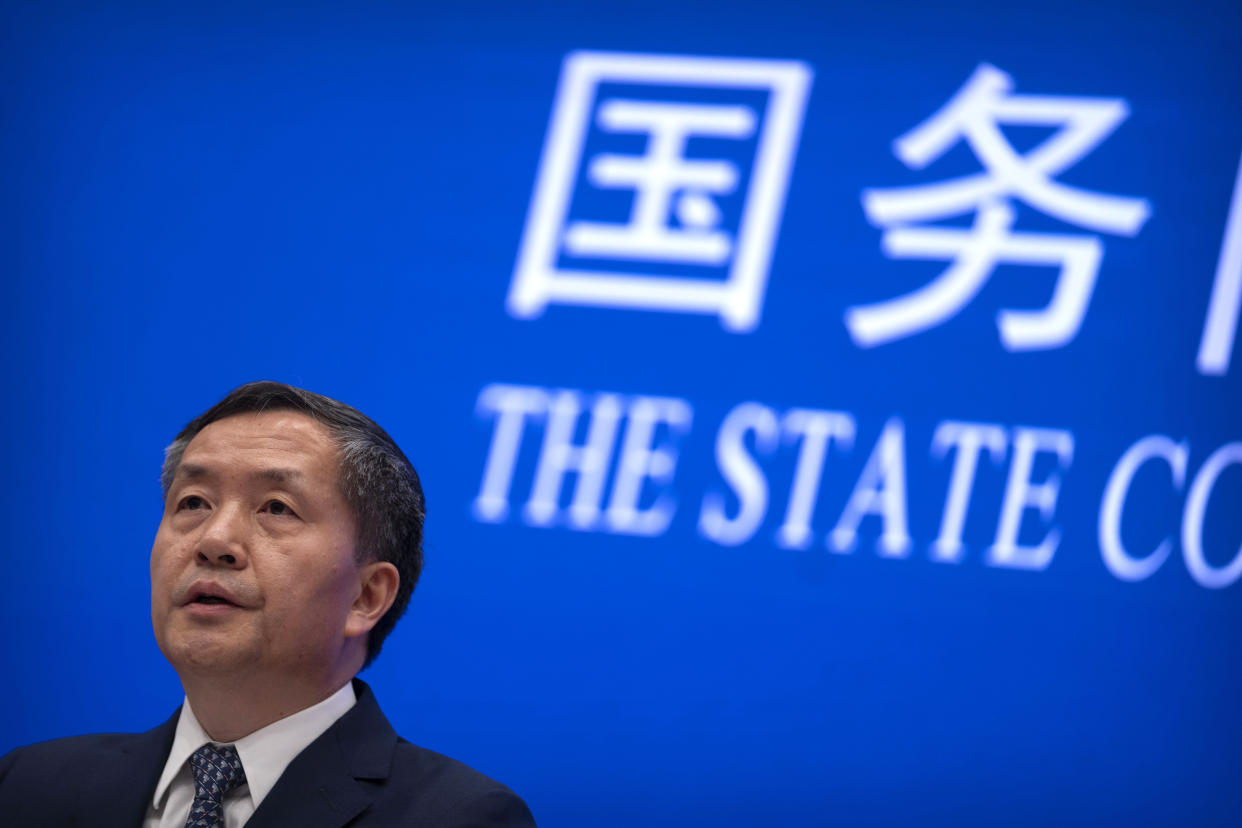
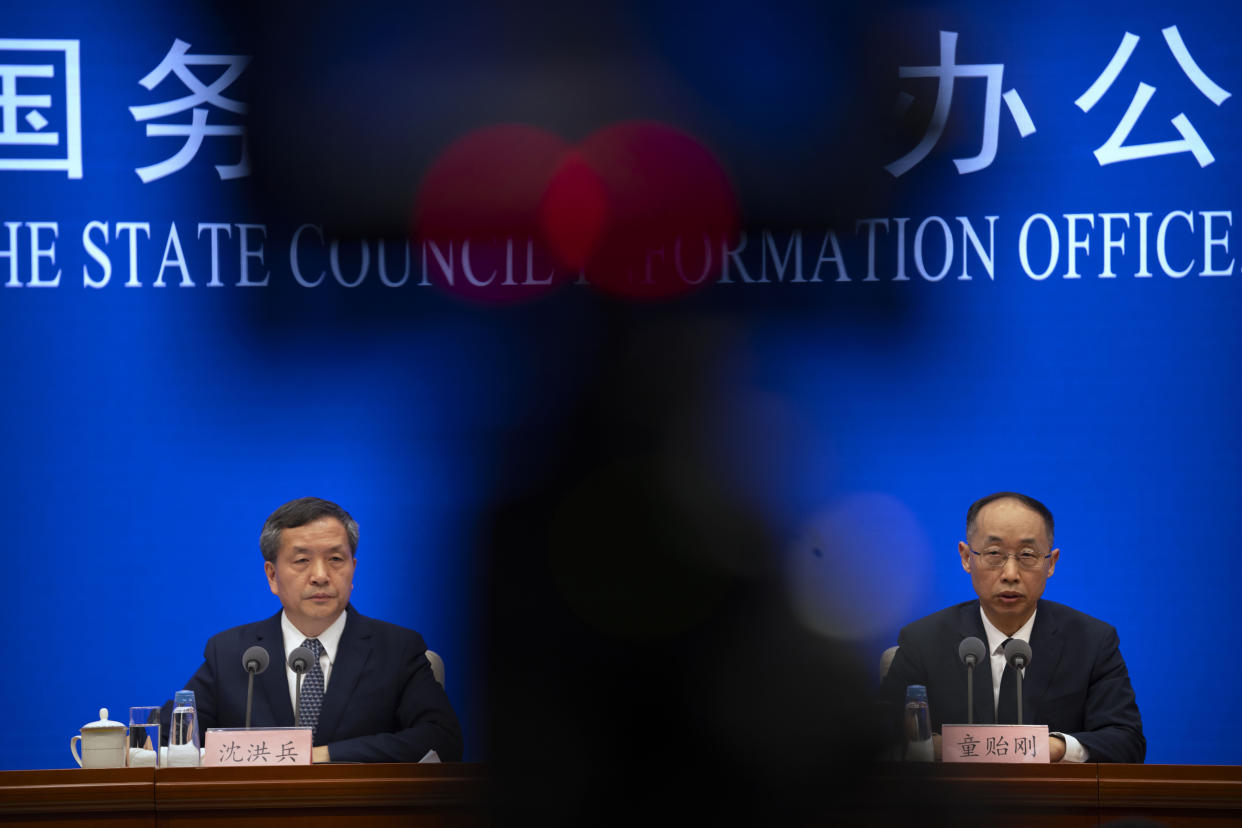
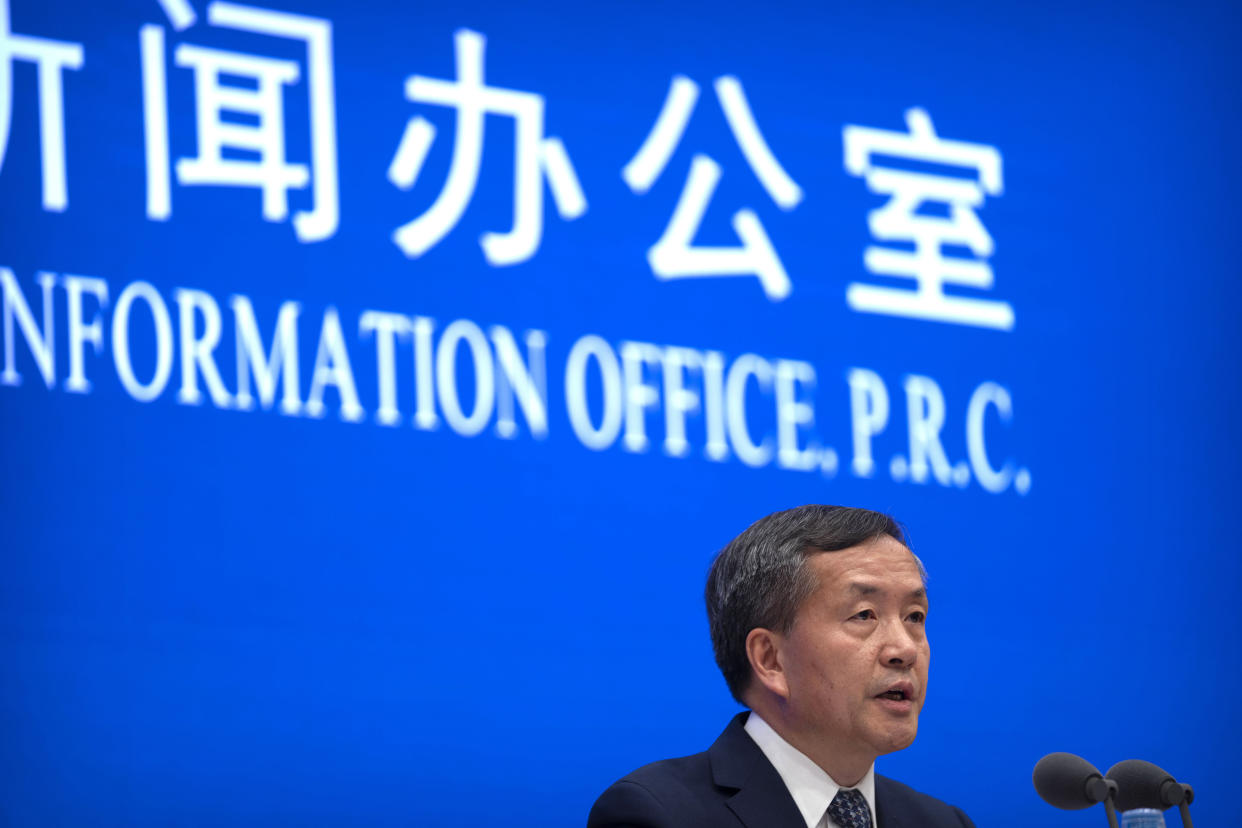
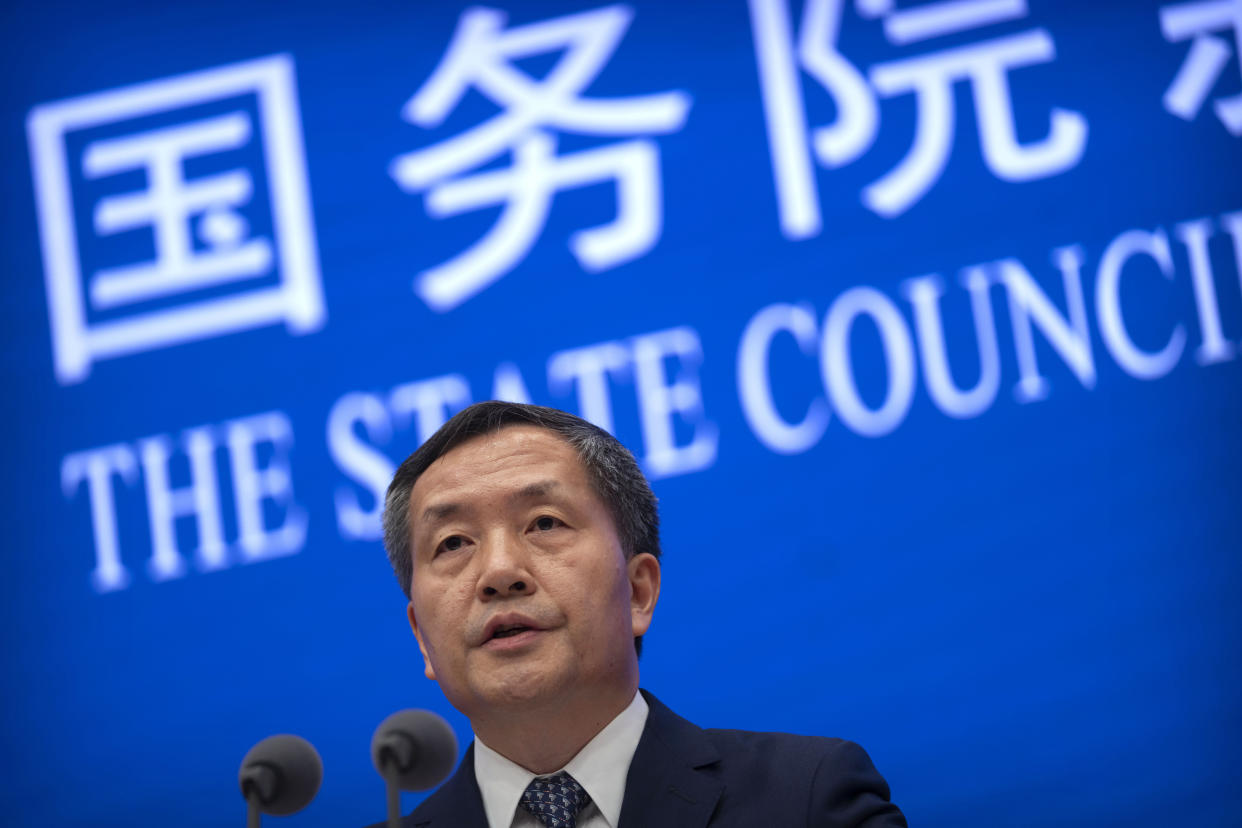
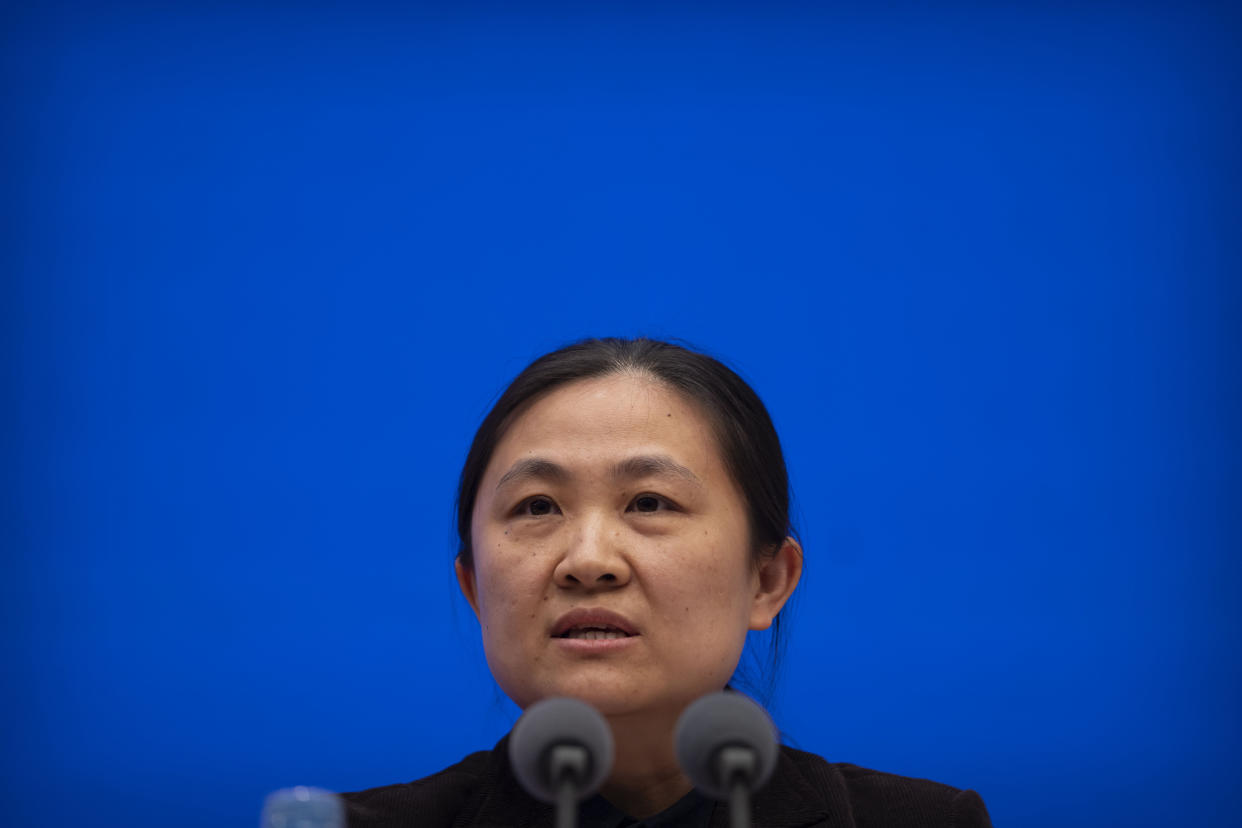
Shen Hongbing, the director of the Chinese Center for Disease Control and Prevention, speaks at a press conference on the origins of COVID-19 at the State Council Information Office in Beijing, Saturday, April 8, 2023. (AP Photo/Mark Schiefelbein)
ASSOCIATED PRESS
BEIJING (AP) — Chinese health officials defended their search for the source of the COVID-19 virus and lashed out Saturday at the World Health Organization after its leader said Beijing should have shared genetic information earlier.
The WHO comments were “offensive and disrespectful," said the director of the China Center for Disease Control and Prevention, Shen Hongbing. He accused the WHO of “attempting to smear China” and said it should avoid helping others "politicize COVID-19.”
“As a responsible country and as scientists, we have always actively shared research results with scientists from around the world,” Shen said at a news conference.
Many scientists believe it jumped from animals to humans at a market in Wuhan, but the city also is home to laboratories including China’s top facility for collecting viruses. That prompted suggestions COVID-19 might have leaked from one.
The ruling Communist Party has tried to deflect criticism of its handling of the outbreak by spreading uncertainty about its origins.
Officials have repeated anti-U.S. conspiracy theories that the virus was created by Washington and smuggled into China. The government also says the virus might have entered China on mail or food shipments, though scientists abroad see no evidence to support that.
Chinese officials suppressed information about the Wuhan outbreak in 2019 and punished a doctor who warned others about the new disease. The ruling party reversed course in early 2020 and shut down access to major cities and most international travel to contain the disease.
The genetic material cited by the WHO’s Tedros was uploaded recently to a global database but collected in 2020 at a Wuhan market where wildlife was sold.
The samples show DNA from raccoon dogs mingled with the virus, scientists say. They say that adds evidence to the hypothesis COVID-19 came from animals, not a lab, but doesn’t resolve the question of where it started. They say the virus also might have spread to raccoon dogs from humans.
The information was removed by Chinese officials from the database after foreign scientists asked the CDC about it, but it had been copied by a French expert and shared with researchers outside China.
A CDC researcher, Zhou Lei, who worked in Wuhan, said Chinese scientists “shared all the data we had” and “adhered to principles of openness, objectivity and transparency.”
Shen said scientists investigated the possibility of a laboratory leak and “fully shared our research and data without any concealment or reservation.”
Shen said the source of COVID-19 had yet to be found, but he noted it took years to identify the AIDS virus and its origin still is unclear.
“Some forces and figures who instigate and participate in politicizing the traceability issue and attempting to smear China should not assume that the vision of the scientific community around the world will be blinded by their clumsy manipulation,” Shen said.




 Posts
Posts

