


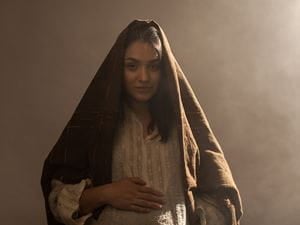
Mary, the mother of Jesus, commonly referred to as Mary, Mother of God, Saint Mary, Virgin Mary and Blessed Virgin Mary, is one of the most admired figures in Scripture and is considered by many to be the greatest of all Christian saints. She was a willing servant who trusted God and obeyed His call. While her life held great honor, her calling also required great suffering.
Though there was joy in motherhood, there was great pain in the privilege of being the mother of the Messiah. Despite these things, she responded to God with great obedience and submission to His plan. Her life never robbed Jesus of His glory, for her mission was to witness the glory of the Son of God. Here are six fascinating facts about Mary, Mother of Jesus, that everyone should know.
Her life was foreshadowed in the Old Testament.
Mary’s life and role in the history of salvation are foreshadowed in the Old Testament, and the events of her life are recorded in the New Testament. The prophecy of Isaiah 7:14 speaks of the “Virgin-Mother of Emmanuel”: “Therefore, the Lord himself will give you a sign. Behold, a virgin shall conceive and bear a son, and His name shall be called Emmanuel.” Later in Isaiah, Emmanuel is referred to as the future Savior of His people. The prophet foretells an extraordinary future sign: that a virgin, without the cooperation of a man, would give birth to a child who will be “God with us.” This child would remedy the great trials of division facing the people of Israel. Isaiah’s prophecy predicts the Virgin of Nazareth and the birth of Jesus.
She was a woman of great courage and character.
Mary loved God and wanted to serve Him with all her heart. But she was just a poor girl from a humble family in an insignificant town, with little expectations that her life was going to be any different than most. When the angel Gabriel came to Mary to tell her she was chosen and favored by God to be the mother of His son, despite her own fear, she exhibited great courage and character: “I am the Lord’s servant…May your word to me be fulfilled” (Luke 1:38). She also exhibited great courage and character during Jesus’ earthly life and ministry. She pressed Jesus to provide wine when it ran low at the wedding in Cana, she approached Jesus when He was left behind at the temple, she went from Nazareth to Capernaum when she learned what was being reported there about Jesus, and she attempted to protect Jesus in some of the stickiest of situations. She was a person of discipleship and faith and the first faithful follower of Jesus.
Believed by many to be the greatest of all saints.
Mary is considered by many to be the greatest of all saints because she was chosen and prepared by God to be the mother of His Son and because she freely chose to cooperate fully in the graces given to her and in the vocation she received. In Mary’s Song of Praise (The Magnificat), she says, “My soul magnifies the Lord, and my spirit rejoices in God my Savior, for He has looked on the humble estate of His servant. For behold, from now on all generations will call me blessed; for He who is mighty had done great things for me, and holy is His name” (Luke 1:46-49).
She was instrumental in Jesus’ life.
The first recorded miracle of Jesus was performed at a wedding in Cana. In John 2:1-2, we are told, “When the wine ran out, the mother of Jesus said to Him, ‘They have no wine.’ And Jesus said to her, ‘Woman, what does this have to do with me? My hour has not yet come.’ His mother said to the servants. ‘Do whatever he tells you.’” Mary was instrumental in calling Jesus’ attention to the need, and these verses remind us of Jesus’ true purpose. She was also present at the Crucifixion in Jerusalem. There, she was given into John the Apostle’s care. She was also present with the disciples in the days before the Pentecost. It is also believed that she was present at the resurrection and Ascension.
The true meaning of the Immaculate Conception.
The Immaculate Conception is commonly and mistakenly taken to mean the conception of Jesus Christ in Mary’s womb. However, it does not refer to Mary’s sexual condition when she gave birth to Jesus. It is a belief about her condition at her conception. That is, she was “immaculate” by an act of God at the time she was conceived so she would be sinless and, therefore, the “fitting” mother of the Son of God. The virginal conception refers to the belief that Mary became pregnant with Jesus by a miracle instead of sexual intercourse. The Immaculate Conception deals with the conception of Mary herself, not that of her son.
The sinlessness of Mary can’t be found in the Bible.
While Catholic tradition teaches that Mary was sinless, Protestants believe only Jesus was sinless. Catholicism also teaches that Mary was perpetually a virgin; however, most Protestants believe Mary had children with Joseph in a usual manner. The perpetual virginity of Mary was challenged by Matthews’s Gospel, which says that Joseph “did not have sexual relations with her until her son was born” (Matthew 1:25). The sinlessness of Mary can’t be found in the Bible and is more so a matter of church tradition.
Pope Pius IX once said, “God has committed to Mary the treasury of all good things, in order that everyone may know that through her are obtained every hope, every grace, and all salvation.” The Mary moments in the New Testament point to Jesus every time. Her song, her encounter with Jesus in the temple, her intervention at the wedding at Cana and her standing at the cross lead us back to Jesus, His mission and our salvation. Her life was to witness the glory of her Son, and we can’t help but admire her for that.



 Posts
Posts

