
Lessons from the Cardinal Pell Affair
There can be no justice without moral integrity on the part of the main actors (judges, journalists, bishops), and no living faith without the courage to suffer for one’s convictions.
Who steals my purse steals trash ’tis something, nothing;‘Twas mine, ’tis his, and has been slave to thousands,But he that filches from me my good name
Robs me of that which not enriches him,And makes me poor indeed.— Shakespeare, Othello
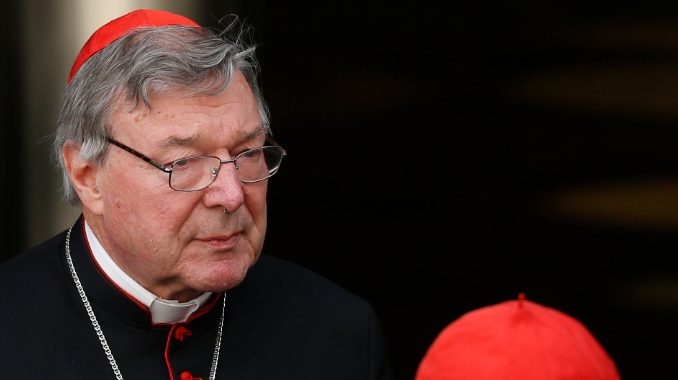
Cardinal George Pell was falsely accused. After spending 404 days in solitary confinement, his conviction was finally quashed by the High Court of Australia in a unanimous decision [7-0]. Such is the hysteria whipped up by the anti-Pell – indeed anti-Catholic – media in Australia that the country is still divided; his life is still in danger.
The presumption of innocence is one of the basic pillars of criminal justice. An accused person is presumed to be innocent, until guilt has been proved beyond reasonable doubt. That is a principle common to all legal systems in the free world, including Canon Law.
In the case of clerics accused of sexual offenses, especially against minors or vulnerable adults, this principle seems to have been replaced by the presumption of guilt until the accused can prove his own innocence. This reversal of the burden of proof is a grotesque distortion of normative jurisprudence, moral law and Canon Law.
This situation is, in large part, due to the shock and outrage that continues to be felt after the extent and horror of clerical sexual abuse, and the cover-up by bishops and religious superiors was revealed.
But even when someone is found to be not guilty, the suspicion remains. A man could be deprived of his good name. And his family too. Since the canonical process is often delayed, a priest can remain suspended for years, at a reduced salary. If he is sick in America without health insurance, this could kill him.
Compared with other clerics falsely accused, Cardinal Pell was fortunate. First of all, there was Justice Weinberg, whose 220-page dissenting judgment was highly persuasive to the High Court. Secondly, there was a journalist, Andrew Bolt, who, after interviewing him in Rome at the start of the saga, was convinced of Pell’s innocence. Both of these men of integrity paid a heavy price in terms of public abuse.
In his April 14th television interview with Bolt, Pell exuded calm, inner joy, gratitude, and not a little humor. He showed no rancor, and forgave his accuser – thanks to a clear conscience and a firm faith in God, his true Judge. He bore his prison sentence with equanimity and with spiritual profit. Jail was, he said, like a spiritual Retreat. He enjoyed good relations with his prison guards. He made friends with his fellow-prisoners. They cheered when his conviction was quashed.

One lesson to be learned from this whole affair is that there can be no justice without moral integrity on the part of the main actors (judges, journalists, bishops), and no living faith without the courage to suffer for one’s convictions. Pell was – and is – intensely disliked by some people inside and outside the Church because of his public stance on the Church’s moral teaching. Catholic journalists of a “liberal” bent gloated over his false conviction; they were mostly silent on his acquittal. Few of his fellow-bishops behaved any better. This reflects the still unresolved crisis in the Church with regard to her moral teaching.
Secondly, we need to give more attention to the Eight Commandment, to not bear false witness against your neighbor. According to the Catechism, “Respect for the reputation of a person forbids every attitude and word likely to cause them an unjust injury”, such as rash judgement, detraction, and calumny (CCC 2477). Are we not all prone to rash judgement when we accept an accusation at face value? To what extent are journalists guilty of the first two at least, when they publish suspicious rumors about prominent figures from anonymous “sources”? The Victoria Police Department actually advertised for accusations against Pell. That is calumny of the gravest kind.
Making up for earlier mishandling of such cases in the past, bishops have drawn up much needed, stringent protocols for dealing with accusations. Clerical sexual abuse is gravely damaging to the victims. When a case is recent, and other children could be endangered, immediate action must be taken. In the case of accusations of an historic nature, however, prudence would demand that superiors be circumspect. Judging credibility is not easy. However, because of moral cowardice (fear of making a mistake, or fear of being later accused themselves of ignoring a complaint), some ordinaries are inclined to act immediately and withdraw the priest from ministry – leaving it to the courts to judge the credibility of an historical allegation.
In the United States, it seems that process has been driven by attorneys and diocesan insurance companies, with the sole motive of avoiding the massive expense of a trial. In one notorious archdiocese, it has become a cottage industry. A lay Canon lawyer with experience in this area informs me that some bishops even fail to give priests due process – with some priests driven to suicide because of lack of support from their bishop. This is evidently a grave offense against canonical equity and natural justice.
If the accused is found not guilty – after years waiting to be tried, first by a civil court and then by a Church tribunal – he may be returned to ministry, sometimes under certain conditions. Even without conditions, the suspicion remains. He is tainted – and his family with him.
Admittedly, previously Church leaders gave little credence to allegations of sexual crimes against children and vulnerable adults. They swept such matters under the carpet, and shunted offending clerics from pillar to post, while sternly warning about the dangers of gossip. Now they seem to err in the opposite direction, taking at face value any accusation made against a priest. Both extremes betray a lack of moral integrity. In America, the grave injustice of suborning a witness by diocesan “safeguarding panels” is not unknown. (That is: the use of evidence from a complainant who received a financial settlement as an inducement.) And what should one say about the canonical “administrative process” introduced by the CDF that may deprive the accused of his natural right of defense?
If acquitted, retribution must be made for the suffering inflicted on the falsely accused, whether the accused be lay or clerical, and on their families. With regard to any accused, a press statement supported by the local prosecuting authorities should be made stating the matter has been investigated and found to be without substance or foundation. With regard to a priest, a special Mass should be celebrated by the Bishop to return the pastor to his flock. His salary should be substantially increased and he should be given a sabbatical all expenses paid.
By accepting his unjust accusation at all times in the spirit of 1 Peter 2:19f., as Cardinal Pell evidently did, the rehabilitated cleric can make retribution for the crimes of his brothers, and so become more Christ-like. Loss of one’s good name can then become a path to sanctity.
If you value the news and views Catholic World Report provides, please consider donating to support our efforts. Your contribution will help us continue to make CWR available to all readers worldwide for free, without a subscription. Thank you for your generosity!
Click here for more information on donating to CWR. Click here to sign up for our newsletter.


 Posts
Posts

