How the Psalms Point Us to Jesus
Discovering how the ancient songbook of Israel speaks directly of Christ.
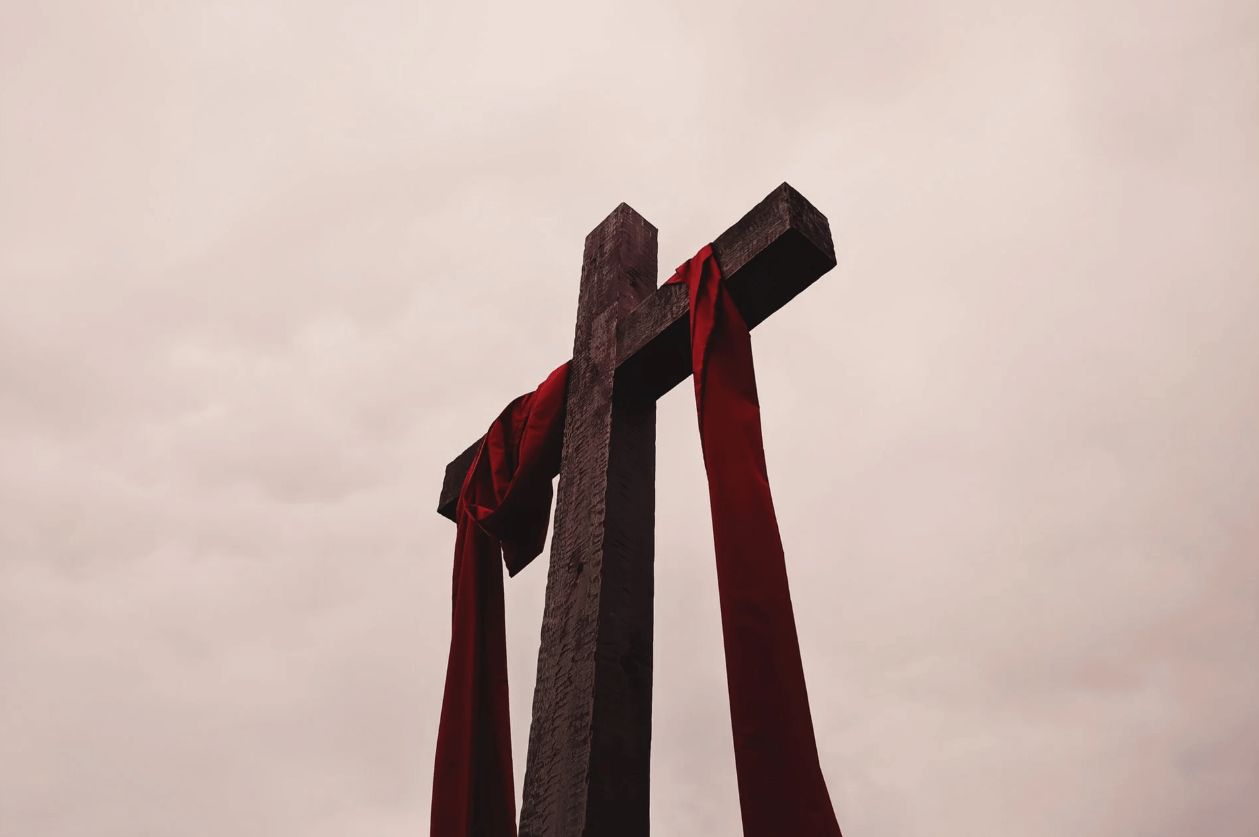
The Psalms are often seen as Israel’s hymnbook a collection of prayers, laments, and praises that reflect the spiritual life of ancient believers. Yet for the writers of the New Testament, particularly the author of Hebrews, the Psalms are far more than poetry or religious expression. They are prophetic and not merely in the typological sense, but in a deeply personal, Christ-centered way.
As Hebrews opens with a powerful declaration about the supremacy of the Son over angels, it doesn't turn first to gospel accounts or even the prophets. It turns to the Psalms. Repeatedly. This begs a critical question. How does the author of Hebrews read the Psalms and find Jesus there so clearly and can we read them the same way?
Let’s explore four key ways the book of Hebrews teaches us to find Jesus in the Psalms, not by adding new meaning, but by uncovering what has always been there.
1. Look Carefully at the Wording
Hebrews 1:8–9 cites Psalm 45:6–7:
“Your throne, O God, is forever and ever… therefore God, your God, has anointed you with the oil of gladness beyond your companions.”
The passage reveals a divine person being addressed as God, who simultaneously has a God. This is no mere royal flattery. It confronts us with the mystery of a divine figure who is exalted yet relationally submitted to another divine person. Who fits this description? Only Jesus — God the Son, exalted in glory, yet who in his humanity was anointed and rewarded by God the Father.
This isn't creative reinterpretation. The exact words demand explanation. They drive the reader to ask: Who is this King that is both God and anointed by God? The psalmist, perhaps unknowingly, points forward to the God-man. The Psalms, when read carefully, set the stage for Christ’s dual nature long before the New Testament spells it out.
2. Pay Attention to Who Is Speaking
One of the most fascinating discoveries in Hebrews is how it identifies who is speaking in the Psalms. Take Psalm 2, quoted in Hebrews 1:5:
“You are my Son; today I have begotten you.”
At first glance, this might seem like David recounting God's promise. But Hebrews reads this as the voice of God the Father speaking directly to the Son. And even more, it recognizes that in Psalm 2:7, it’s the Son himself recalling this declaration: “I will tell of the decree: The Lord said to me…”
This is not just about Christ it is Christ speaking. The Son, through the psalmist, recounts the Father's decree. We see again in Hebrews 2:12, where Psalm 22:22 is attributed directly to Jesus: “I will tell of your name to my brothers.” Psalm 22, with its piercing cries and suffering imagery, begins with, “My God, my God, why have you forsaken me?” the very words Jesus spoke on the cross.
The Psalms are not only about Christ; in some places, they are spoken by Christ. As Christians read the Psalms, we are invited to ask not only “Who is this about?” but “Who is speaking here?” In many cases, it is Jesus himself speaking prophetically through the voice of David.
3. Expect the Psalms to Speak Truly
Psalm 8, cited in Hebrews 2:6–8, praises God for creating man just “a little lower than the angels,” and placing all things under his feet. Yet Hebrews acknowledges the tension: “At present, we do not yet see everything in subjection to him.” The psalm's glorious vision of humanity doesn’t align with the world as we know it.
So what does the author do? He doesn’t dismiss the psalm or reinterpret it. He insists it must be true and he finds the fulfillment in Jesus. Christ, made lower than the angels in his incarnation, suffered death on behalf of all, and is now crowned with glory and honor (Hebrews 2:9). Jesus becomes the perfect human, restoring the dominion humanity lost.
The Psalms don’t speak in empty idealism. They present truth that can only be fully realized in Christ. Theologically, this aligns with Romans 5 and 1 Corinthians 15, where Jesus is portrayed as the second Adam the one who recovers what the first lost.
According to the Barna Group, nearly 60% of professing Christians seldom read the Old Testament. Yet without it, especially without the Psalms, we miss how richly God has prepared His people for Christ. Expect the Psalms to speak truth and let Christ be the fulfillment of that truth.
4. Read in Light of the Full Story of Jesus
Psalm 22 is a striking example of a psalm that maps directly onto the life, death, and resurrection of Jesus. It begins with the crucifixion cry, “My God, my God, why have you forsaken me?” (v.1), speaks of mockery (vv.7–8), pierced hands and feet (v.16), and casting lots for clothing (v.18). Then, it shifts to deliverance and global worship: “All the ends of the earth shall remember and turn to the Lord” (v.27).
Hebrews 2:12 quotes from verse 22 of that same psalm, placing it on the lips of Jesus: “I will tell of your name to my brothers.” Jesus doesn’t just fulfill Psalm 22 he embodies it. It is his psalm, beginning in anguish, ending in triumph.
Psalm 110, also used throughout Hebrews, declares: “The Lord says to my Lord: Sit at my right hand…” This image of divine enthronement becomes a foundational Christological claim. Hebrews interprets this psalm as a description of Jesus’s ascension and priestly rule (Hebrews 1:3, 7:17).
In Psalm 40, the speaker says, “Behold, I have come to do your will, O God.” Hebrews again sees this fulfilled in Christ, who, by doing God’s will, became the final sacrifice (Hebrews 10:7–10). The Psalms not only echo the gospel; they anticipate it in divine speech, pattern, and purpose.
A Pattern for Reading the Psalms Today
So how should we approach the Psalms now, after Christ’s coming and resurrection?
Expect Jesus to be present. Not in every verse, but often either as the speaker, the subject, or the fulfillment. After His resurrection, Jesus taught His disciples that the Psalms spoke of Him (Luke 24:44).
Read with theological attentiveness. Pay attention to wording, shifts in speaker, and the surrounding context. Don’t rush through familiar lines let the psalms raise questions, and let the story of Jesus provide answers.
Avoid overloading the psalm. Not every psalm will give us a full gospel presentation. Instead, focus on the specific aspect of Christ being highlighted: his kingship, his suffering, his priesthood, or his divine identity.
Let the Psalms form your worship. They are not outdated poetry but living words of the Spirit songs of Christ. When we sing them, study them, and pray them, we’re not merely echoing the emotions of ancient believers. We are joining in the worship of the Son who speaks, is spoken of, and is glorified throughout the Psalter.
In an age when many overlook the Old Testament, the book of Hebrews reminds us that the Psalms are not shadows to be dismissed but light to be followed. The early church found Jesus in these ancient songs and so can we.
If you enjoyed this reflection, share it with a friend or subscribe to our newsletter for more articles like this one.


 Posts
Posts

