Saturday, November 2, 2019

People feared dead after boat capsizes as flooding in Somalia forces 182,000 people from their homes

Two children believed to be among those who drowned in city of Beledweyne, UN humanitarian arm says

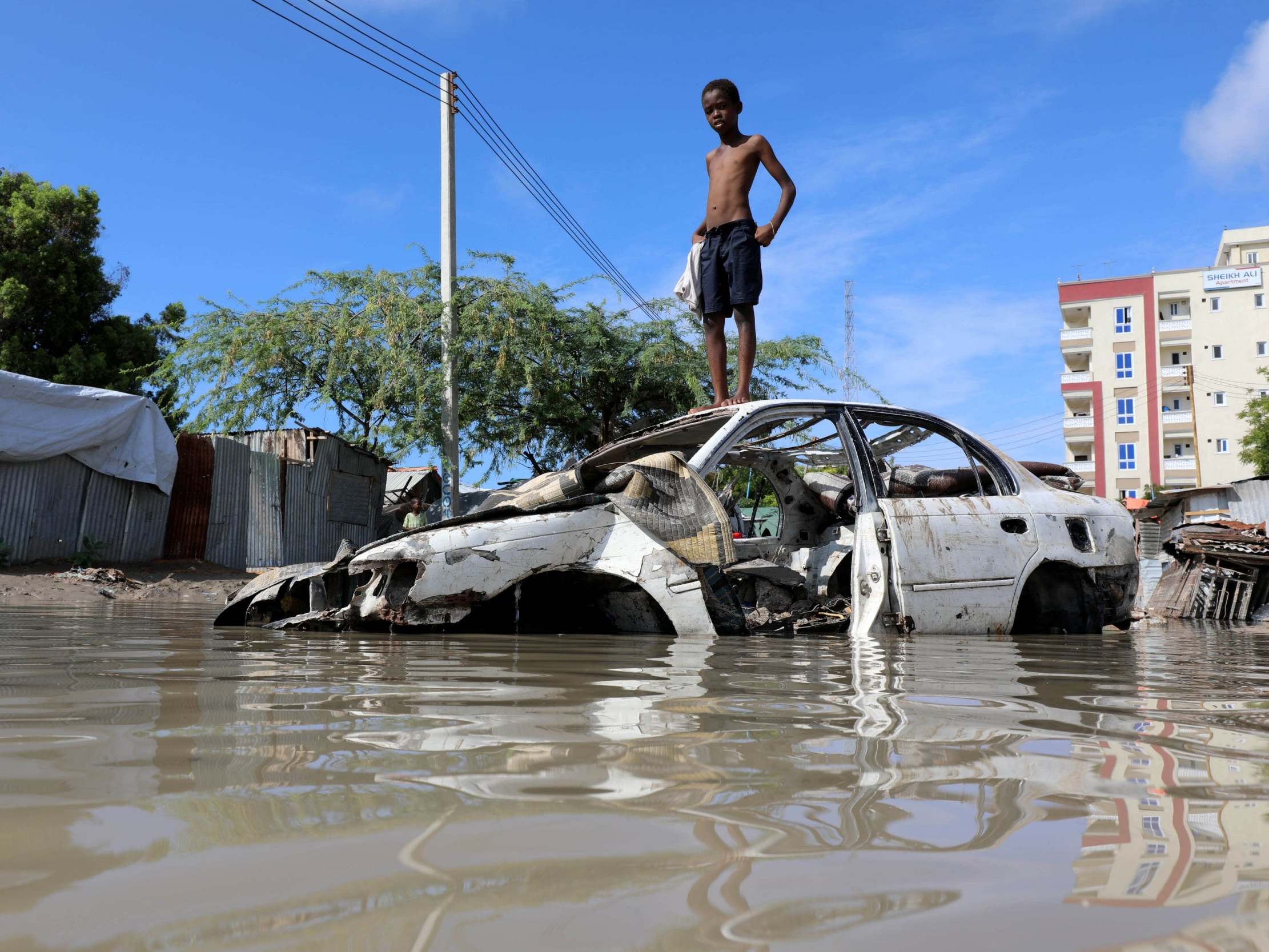
A Somali boy stands on a junk vehicle after heavy rain flooded their neighbourhood in Mogadishu, Somalia, 21 October, 2019.
A Somali boy stands on a junk vehicle after heavy rain flooded their neighbourhood in Mogadishu, Somalia, 21 October, 2019. ( REUTERS/Feisal Omar )
Numerous people are feared dead after flooding caused a boat to capsize and thousands to flee their homes in Somalia.
Up to 20 people were thrown into the water during the accident in the central city of Beledweyne, near the Ethiopia border, on Monday, the United Nations Office for the Coordination of Humanitarian Affairs (OCHA) said.
Two children are believed to have been among those who drowned when the vessel overturned in a river flowing through the city in Hiiraan province.
The number of casualties is not yet known, however mixed reports claim between 10 and 15 people are feared dead.
Beledweyne mayor Safiya Hassan Sheikh Ali Jimale was reportedly in the boat at the time but survived, according to Xinhua news agency.
An estimated 182,000 people have been forced to leave their homes across the country early seasonal rains triggered torrential downpours to sweep across the country, particularly in southern areas.
About 164,000 of those were in Beledweyne, also referred to as Belet Weyne, and surrounding areas alone.
The heavy rain has led to the Juba and Shabelle rivers overflowing, causing flooding in southern areas such as Hirshabelle and Jubaland.
Farmland, infrastructure and roads have been destroyed in some of the worst-hit areas.
The Turkish Foreign Ministry offered its condolences in a statement on Tuesday, saying: “We are deeply saddened by the tragic loss of life and extensive damage caused by the heavy flooding in the city of Beledweyne in Somalia.
“We share the grief of the friendly and brotherly Somali people, wish Allah’s mercy upon those who lost their lives and extend our condolences to their families.”
Support free-thinking journalism and attend Independent events
Humanitarian organisations have been working alongside national and local authorities in affected areas to provide basic needs including water, shelter and healthcare to those who have been displaced.

South Africa facing worst drought in 1 000 years

South Africa facing worst drought in 1 000 years
In an interview with news agency eNCA on October 28, 2019, hydrology expert Dr. Gideon Groenewald said South Africa is now experiencing the worst drought in a thousand years. He added that the majority of small towns have already run out of water.
Groenewald said the drought was a result of a natural drying cycle, and no one was to blame.
Aside from the drying water tap, low rainfall and poor infrastructure also contributed to the worsening drought that has left thousands of locals suffering.
Five villages have reportedly been experiencing water scarcity for three months, leaving livestock dead, withered crops, and closed schools.
Residents have been devastated over the apparent lack of support from the government. On the other hand, the Western Cape province avoided the disaster proactively because the city's government had implemented water rationing, dam rehabilitation projects, and desalination schemes two years prior.

"We are in a drought that has lasted for about 20 years in short term, 220 years in longer-term, and it’s now going in for the worst drought in 1 000 years according to my records, so it means no human being or institution can be blamed for the fact that the dams are dry and the rivers are drying," Groenewald said.
According to South Africa’s Weather Service, the current dry season will continue until December, and the country may experience a temporary respite. 
Dam levels are much lower in every province in 2019 compared to the same months in 2018 This means that the dry season in 2020 could also be more difficult to endure unless the nation receives adequate or excess rainfall.
Featured image credit: @free-photos/Pixabay

Contact Form

Name

Email *

Message *