|
|


Tucker Carlson’s Twitter bio has undergone an unusual alteration and sparked rumours that his account was hacked.The Fox News host’s Twitter bio says he is a person of colour and a climate activist who identifies as non-binary. It also described him as a “visionary tech founder” and an informal adviser to Ukraine president Volodymyr Zelensky, who he has often criticised on his show.
“Non-binary climate change activist of color. Visionary tech founder. CNBC market analyst. Informal Zelensky advisor,” read the new bio that also has two transgender pride flag emojis on it.The odd update was brought to attention by members of the hacktivist collective and activist group Anonymous. “Tucker Carlson you’ve been #hacked,” they said.
But it turns out Carlson attempted to troll his critics in a repeat of a similar stunt he pulled in May last year when he changed his bio to “fully vaccinated”.
A spokesperson for Fox News told The Daily Beast that the claim his account was hacked was “false, the account has not been hacked”.
“BREAKING: Tucker Carlson was just HACKED! The hacker group Anonymous has apparently taken credit for hacking Tucker Carlson’s Twitter account,” his tweet read.“Stop whatever you are doing, and go look at @TuckerCarlson‘s bio before it gets fixed! Whoever hacked him, hit the nail on the head!,” said another Twitter user Brent Hennrich.
But some Twitter users soon pointed out that his account was not hacked.“Tucker Carlson getting a lot of free engagement on his Twitter account tonight, but he wasn’t hacked. This is what his bio was a month ago. Everyone has just taken the bait,” Damin Toell said.
Last year, he changed his Twitter bio to “Fully vaccinated. They/Theirs” and a few months later changed it to the pronouns “She/Her” and adding the Ukrainian flag emoji.More than a million pages of internal Fox messages that were part of a defamation lawsuit against Fox News have revealed high-ranking Fox News personalities had cast doubt on Donald Trump’s election theory even as the network continued to push it on air.
Carlson, who downplayed the Jan 6 riots, told his staff about Mr Trump, “I hate him passionately”, according to a court filing by Dominion Voting Systems that has slapped the lawsuit against the news network.
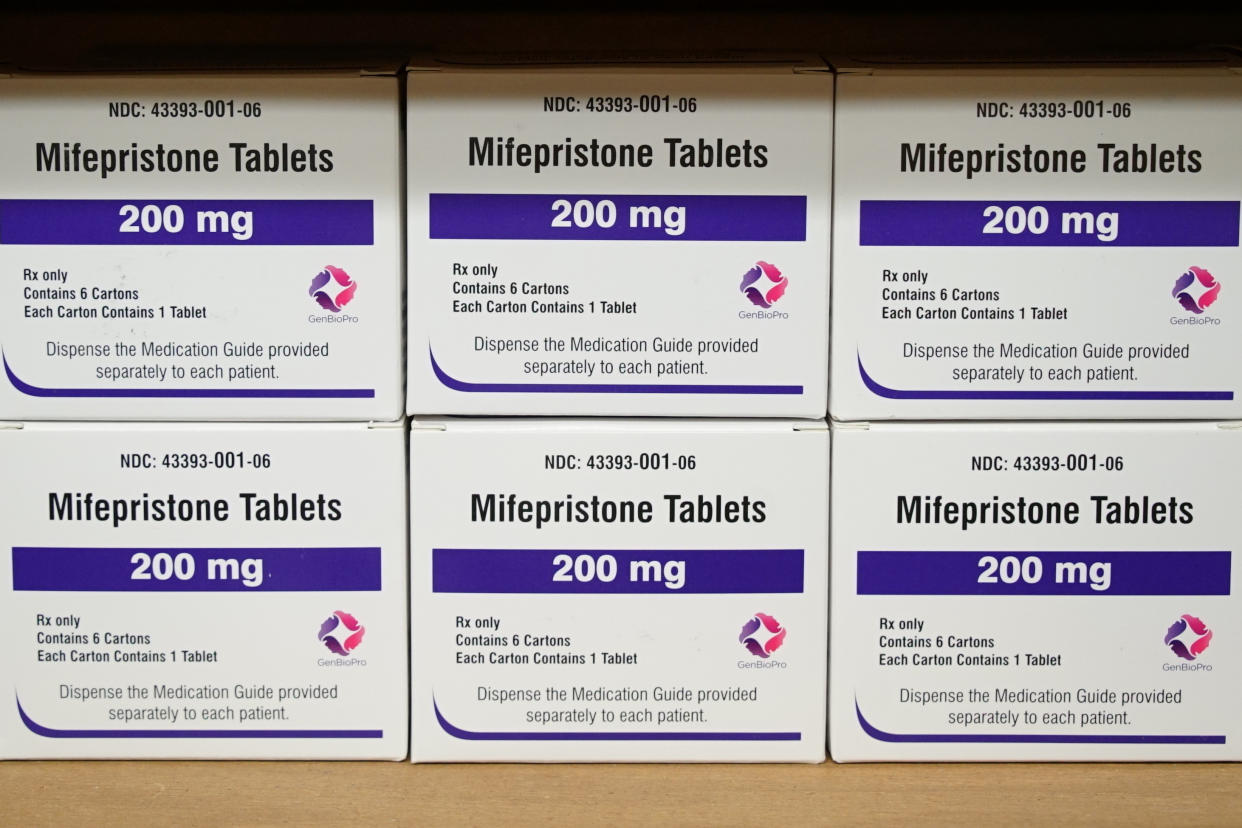
AMARILLO, Texas (AP) — A federal judge will hear arguments Wednesday in a high-stakes court case that could threaten access to medication abortion and blunt the authority of U.S. drug regulators.
Judge Matthew Kacsmaryk of Texas is weighing a lawsuit from Christian conservatives aimed at overturning the Food and Drug Administration’s more than 2-decade-old approval of the abortion pill mifepristone. The drug, when used with a second pill, has become the most common method of abortion in the U.S.
There is essentially no precedent for a lone judge overruling the scientific decisions of the FDA. And legal experts have warned of far-reaching consequences if judges begin second-guessing FDA decisions on drug safety and effectiveness.
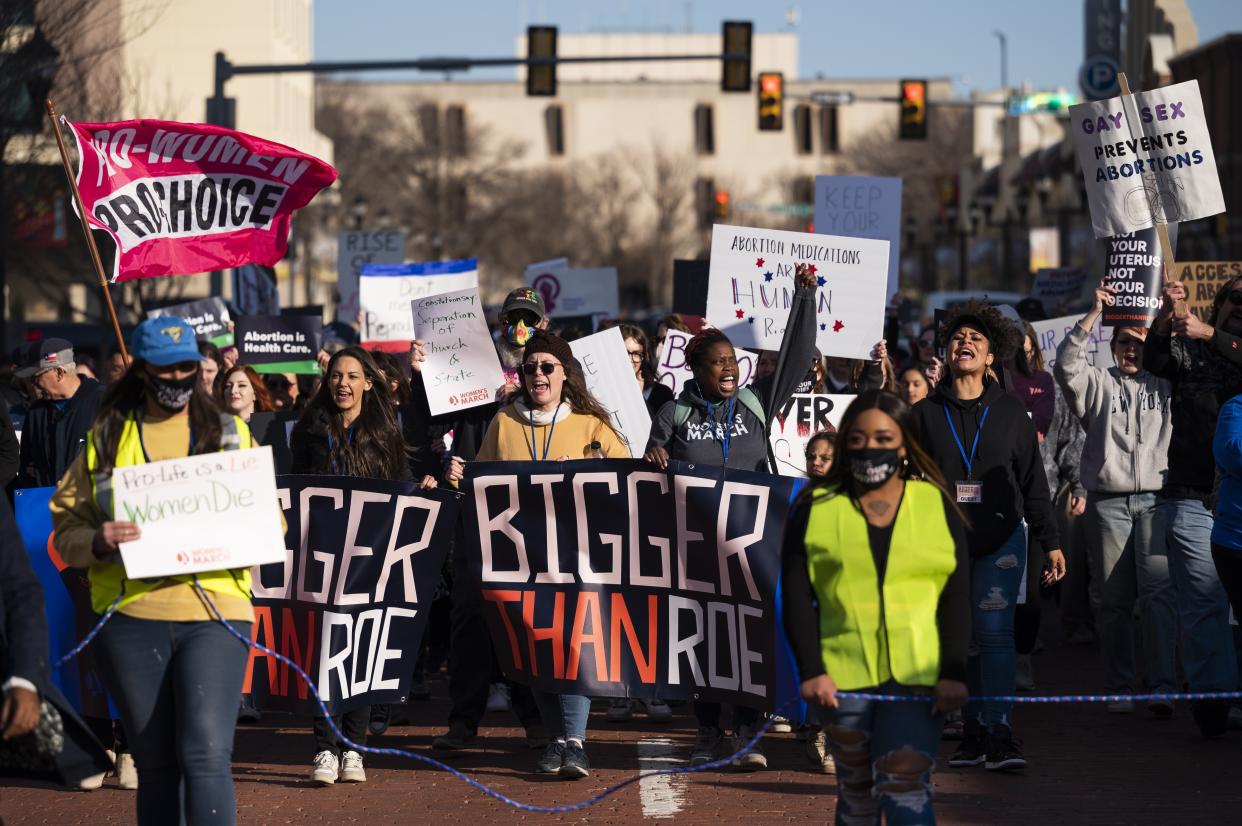
Wednesday's hearing is the first in the case, which is being intensely tracked by groups on both sides of the abortion issue after last year's reversal of Roe v. Wade. However, there was little advance notice of the high-profile session, which only appeared on the public online docket late Monday after news reports raised concerns about a lack of transparency in the proceedings.
Kacsmaryk told attorneys in the case Friday that he would delay the filing to minimize threats and possible protests, a development first reported by The Washington Post. He also asked the lawyers not to disclose the date of the hearing, according to a transcript of the meeting released Tuesday.
Such actions by a judge are highly unusual because court proceedings are almost always open to the public and transparency is an underlying assumption of the American judicial system.
Kacsmaryk, appointed by President Donald Trump, formerly worked as an attorney for a Christian legal group and has written critically of laws allowing abortion. Supporters of abortion rights say conservatives are steering cases to his courtroom because they believe he will rule in their favor.
On Wednesday, Kacsmaryk will hear arguments in Amarillo from the Alliance for Defending Freedom — which filed its lawsuit on behalf of several anti-abortion groups and physicians — as well as federal attorneys representing the FDA. The drug's manufacturer, Danco Laboratories, is also a party in the case and set to argue for keeping its pill available.
The Alliance is seeking an injunction that would force the FDA to revoke its approval of mifepristone. But it's unclear how quickly that could happen or what the process would entail. The FDA has its own procedures for revoking drug approvals that involve public hearings and scientific deliberations, which can take months or years.
If Kacsmaryk rules against the FDA, federal attorneys are expected to swiftly appeal the decision and seek an emergency stay to stop it from taking effect while the case proceeds.
Mifepristone is part of a two-drug regimen that has been the standard for medication abortion in the U.S since 2000. If mifepristone is sidelined, clinics and doctors that prescribe the combination say they plan to switch to using only the second drug, misoprostol. That single-drug approach is slightly less effective at ending pregnancies, although it is widely used in countries where mifepristone is illegal or unavailable.
The Texas lawsuit alleges that the FDA's approval of mifepristone in 2000 was flawed for several reasons, including an inadequate review of the pill's safety risks. The suit also challenges several later FDA decisions that loosened restrictions on the pill, including eliminating a requirement that women pick it up in person.
Lawyers for the FDA have pointed out that serious side effects with mifepristone are rare and the agency has repeatedly affirmed the drug's safety by reviewing subsequent studies and data. Pulling the drug more than 20 years after approval would be “extraordinary and unprecedented,” the government stated in its legal response.
Typically, the FDA’s authority to regulate prescription drugs has gone unchallenged. But more than a dozen states now have laws restricting abortion broadly — and the pills specifically — following last year’s Supreme Court decision overturning Roe v. Wade.
Lawsuits challenging state restrictions, including those in North Carolina and West Virginia, are progressing separately and are expected to continue for years.
___
Perrone reported from Washington.
___
The Associated Press Health and Science Department receives support from the Howard Hughes Medical Institute’s Science and Educational Media Group. The AP is solely responsible for all content.
___
Follow AP’s full coverage of abortion: https://apnews.com/hub/abortion
Republican lawmakers in South Carolina are considering a change to the state’s criminal code that would make a person who gets an abortion eligible for the death penalty.
The bill being considered in South Carolina, dubbed the South Carolina Prenatal Equal Protection Act of 2023, would redefine “person” under state law to include a fertilized egg, giving it at the point of conception equal protection under the state’s homicide laws, including the death penalty.
The bill provides an exception for a pregnant person who underwent an abortion “because she was compelled to do so by the threat of imminent death or great bodily injury.” It also provides an exception if the procedure is needed to avert the death of a mother “when all reasonable alternatives to save the life of the unborn child were attempted or none were available.”
The bill does not provide an exception for rape or incest, a point that Rep. Nancy Mace (R-S.C.) took aim at on the House floor last week. Mace has blasted her party for its restrictive abortion policies.
“To see this debate go to the dark places, the dark edges, where it has gone on both sides of the aisle, has been deeply disturbing to me as a woman, as a female legislator, as a mom, and as a victim of rape,” Mace said.
The bill in South Carolina continues a trend of laws in Republican-led states to limit access to abortions and punish it under law after the fall of Roe v. Wade. At least 18 states have imposed near or total abortion bans, according to a New York Times tracker. Eight states have had such bans blocked by courts.
The South Carolina Supreme Court ruled that a ban on abortions after six weeks was unconstitutional.
For the latest news, weather, sports, and streaming video, head to The Hill.

 Posts
All Comments
Posts
All Comments