Alexandria Ocasio-Cortez rejected banning TikTok in her first TikTok video, saying it 'just doesn't feel right to me'
SAM TABAHRITI
Updated
Rep. Alexandria Ocasio-Cortez posted her first TikTok video Saturday.Tom Williams/CQ Roll Call
Rep. Alexandria Ocasio-Cortez discussed calls to ban TikTok in her debut on the app.
The New York Democrat said the bipartisan push to ban TikTok in the US "doesn't feel right to me."
AOC said America needed stronger data and privacy protection laws rather than a TikTok ban.
Rep. Alexandria Ocasio-Cortez said TikTok should not be banned in her first video on the app Saturday.
The New York Democrat started her video by saying: "This is not only my first TikTok, but it is a TikTok about TikTok. Do I believe TikTok should be banned? No."
"I think it's important to discuss how unprecedented of a move this would be. The United States has never before banned a social media company from existence, from operating in our borders," Ocasio-Cortez said. "And this is an app that has over 150 million Americans on it."
Her video, which has had about 3 million views and 545,000 likes, came two days after TikTok CEO Shou Zi Chew testified before Congress. Several politicians did not appear interested in listening to full answers from the executive, as the hearing quickly devolved into a bloodbath of "yes or no" questions.
A potential ban of TikTok also centres on concerns around data privacy, the spread of misinformation, and the safety of minors.
"They say because of this egregious amount of data harvesting, we should ban this app. However, that doesn't really address the core of the issue," Ocasio-Cortez said.
The New York Democrat noted that major social media companies like Meta also collect "troves of deeply personal data." She pointed out that the US doesn't have "significant data or privacy protection laws," before mentioning the European Union's data privacy law, known as the General Data Protection Regulation.
"So to me, the solution here is not to ban an individual company — but to actually protect Americans from this kind of egregious data harvesting that companies can do without your significant ability to say no," Ocasio-Cortez said.
She said issues that posed a significant risk to national security usually triggered a classified briefing for Congress, which had not happened. "So why would we be proposing a ban regarding such a significant issue without being clued in on this at all? It just doesn't feel right to me."
Ocasio-Cortez concluded: "I think a lot of this is putting the cart before the horse because our first priority should be in protecting your ability to exist without social media companies harvesting and commodifying every single piece of data about you, without you, and without your consent."
New Russian campaign tries to entice men to fight in Ukraine
DASHA LITVINOVA
Updated
1 / 10
Russia Ukraine War Recruitment
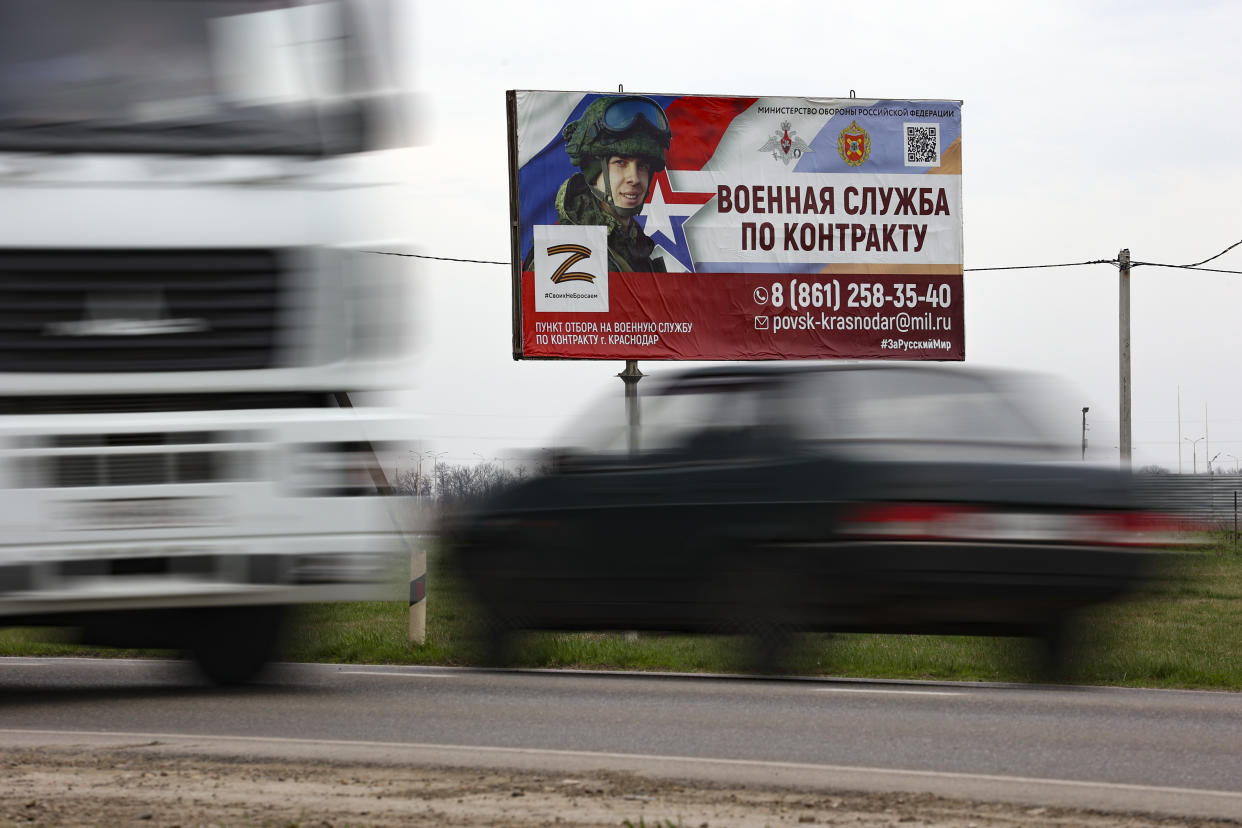
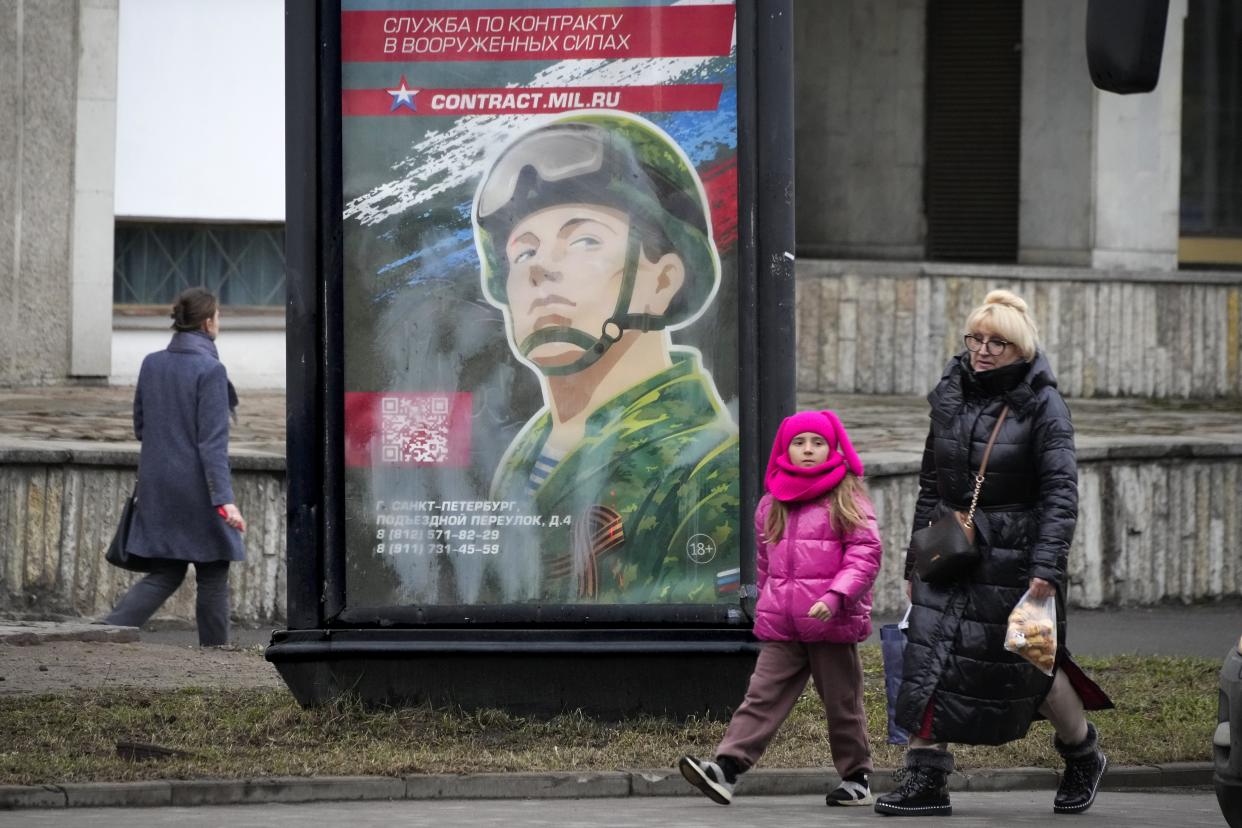
A billboard advertising "Contract military service" is seen beside a highway outside Krasnodar, Russia, Thursday, March 23, 2023. A campaign to replenish Russian troops in Ukraine with more soldiers appears to be underway again, with makeshift recruitment centers popping up in cities and towns, and state institutions posting ads promising cash bonuses and benefits to entice men to sign contracts enabling them to be sent into the battlefield. (AP Photo)
ASSOCIATED PRESS
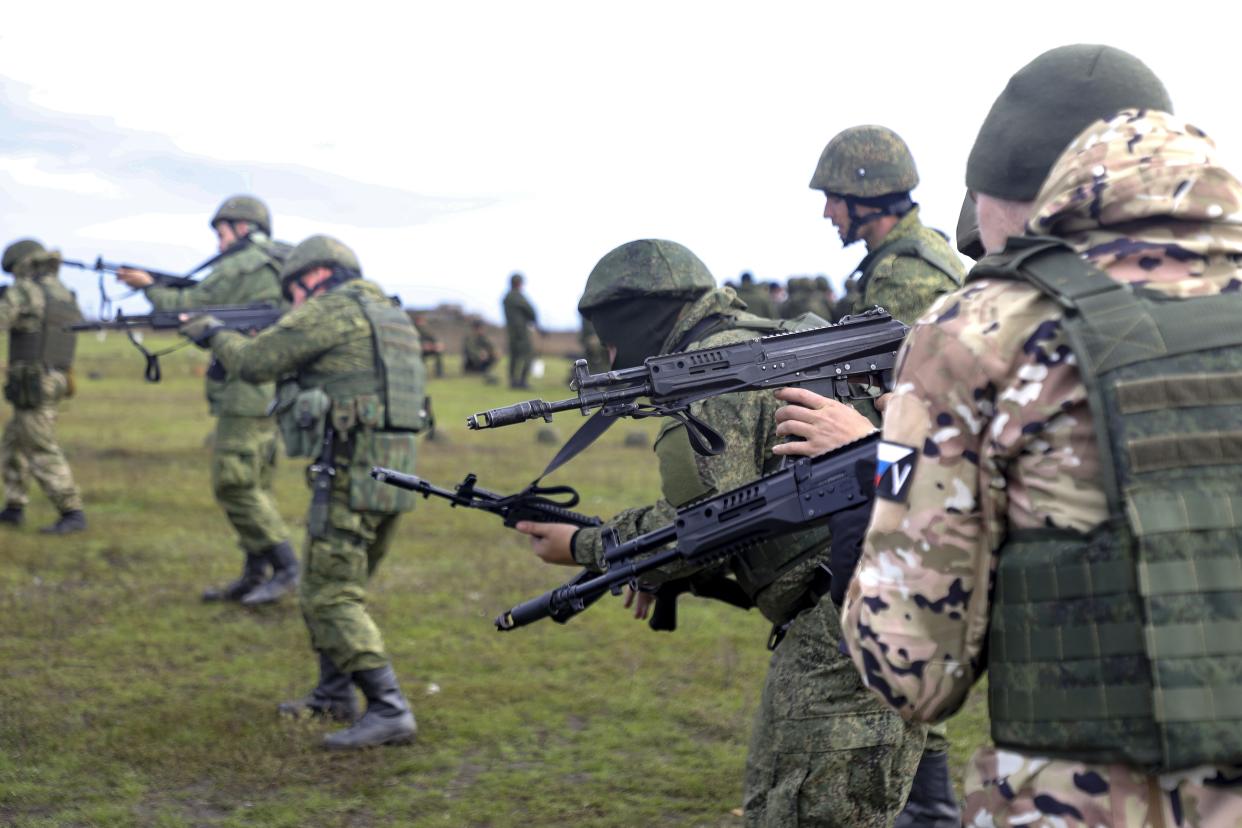
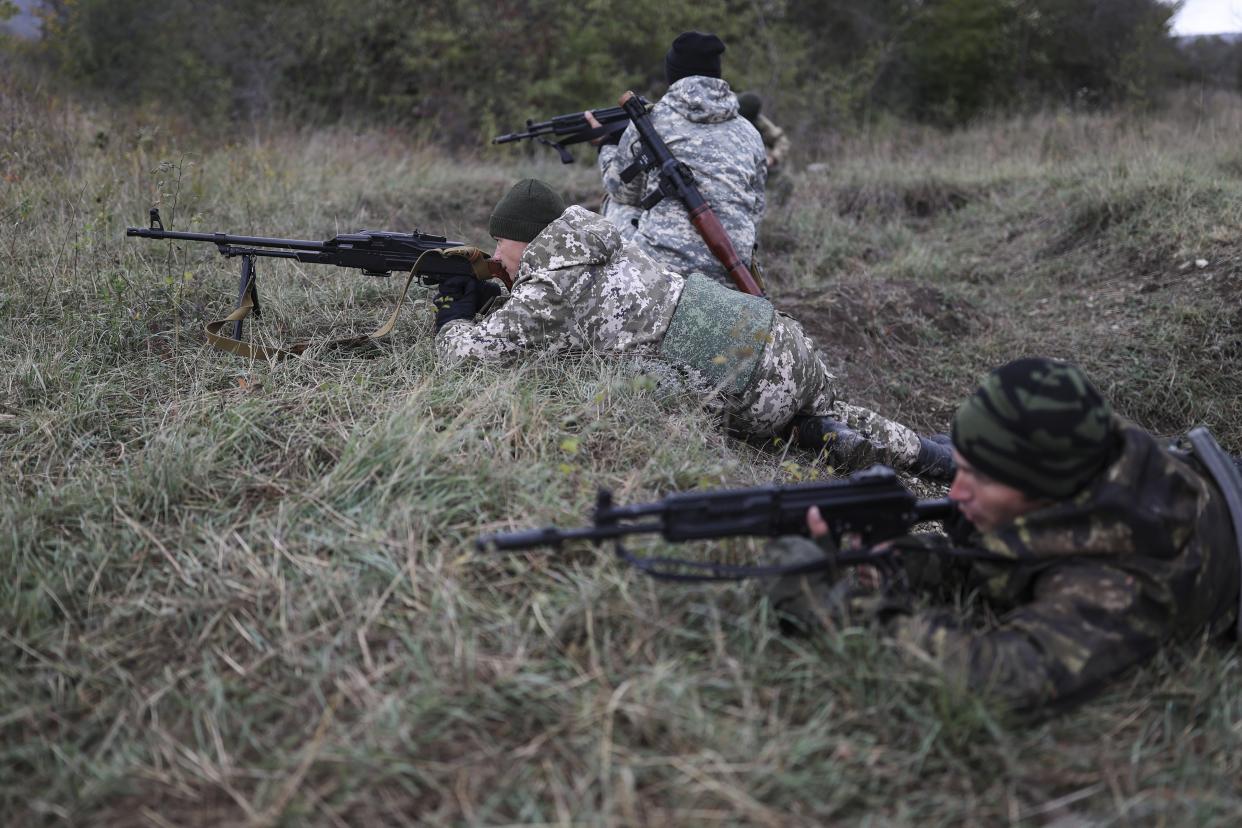
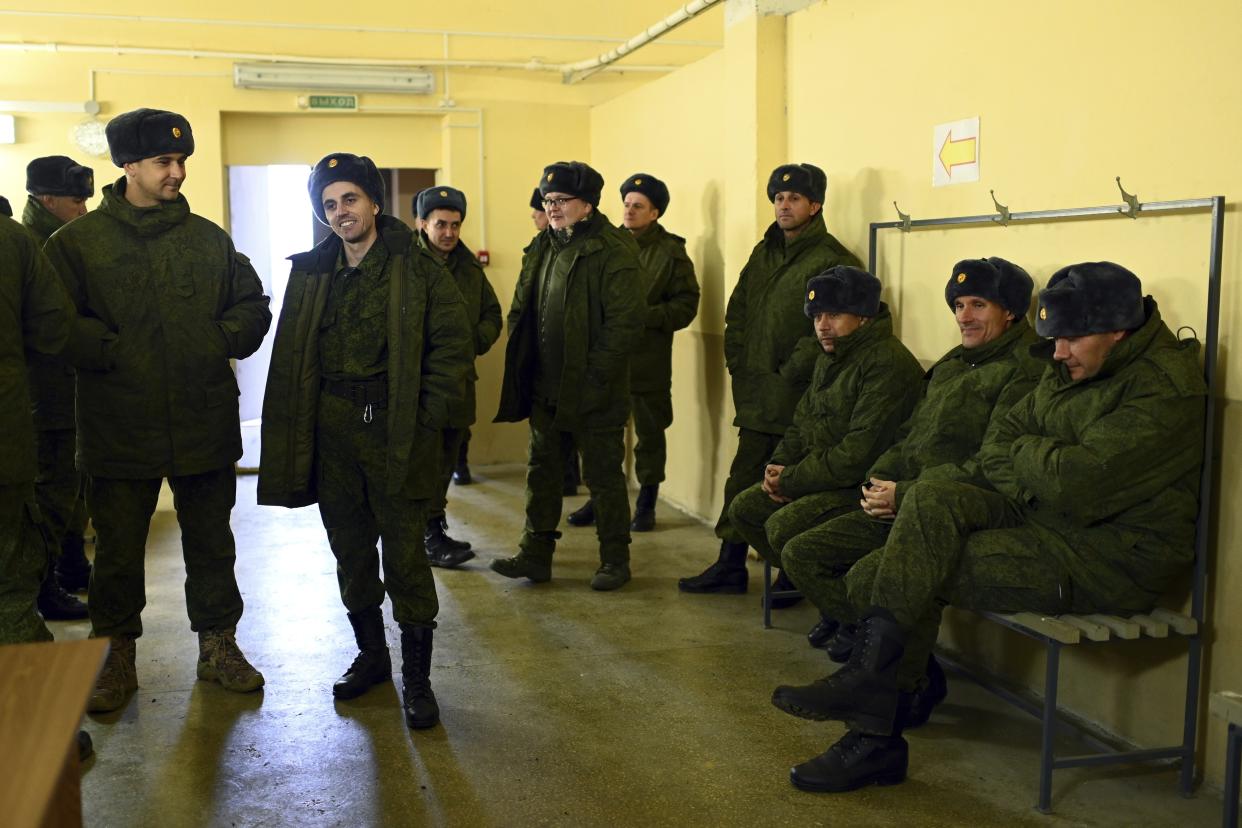
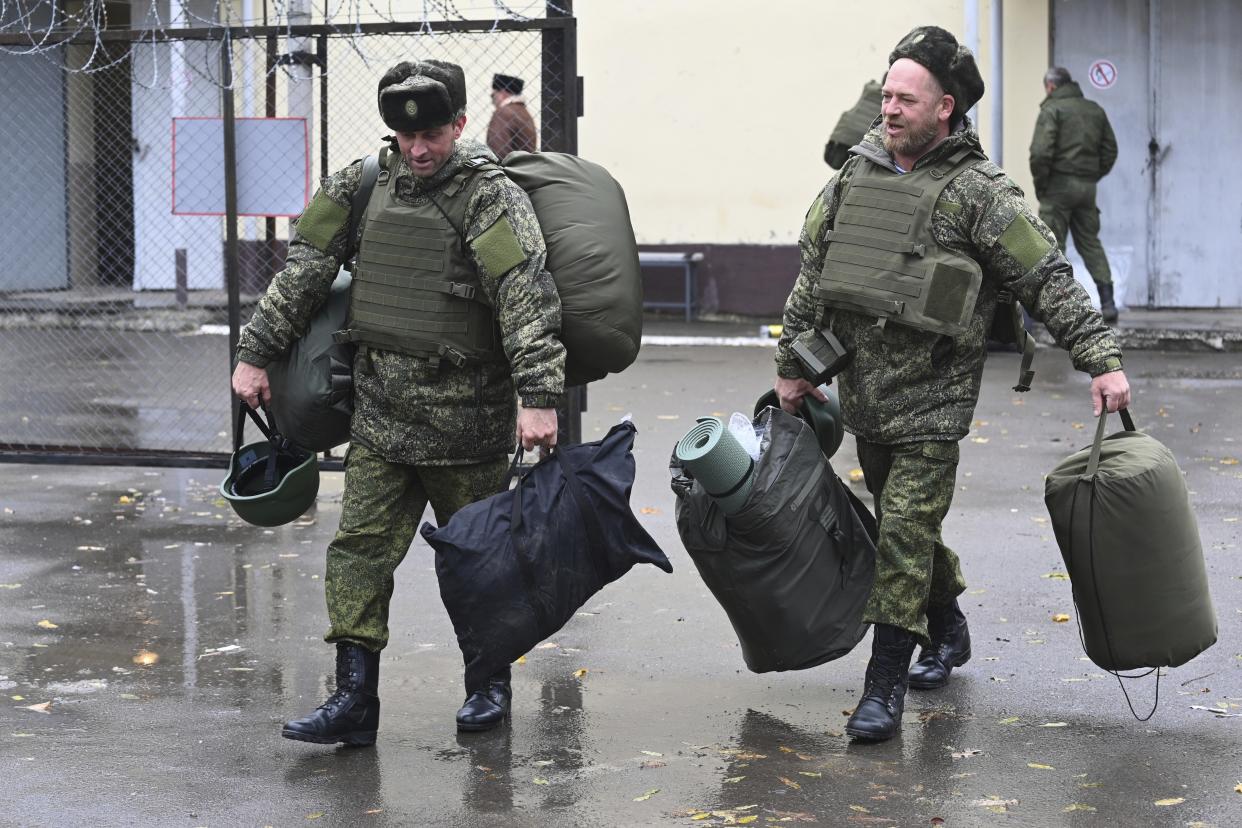
TALLINN, Estonia (AP) — Advertisements promise cash bonuses and enticing benefits. Recruiters are making cold calls to eligible men. Enlistment offices are working with universities and social service agencies to lure students and the unemployed.
A new campaign is underway this spring across Russia, seeking recruits to replenish its troops for the war in Ukraine.
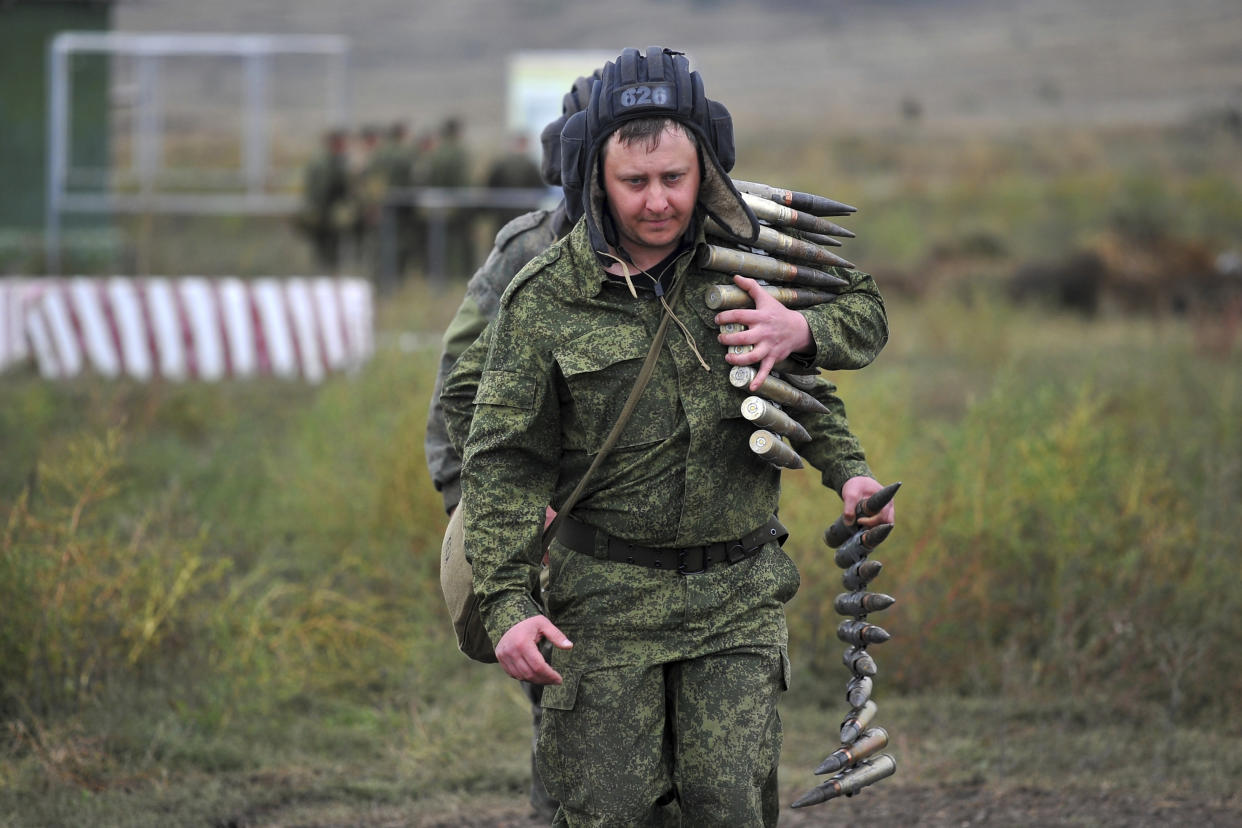
As fighting grinds on in Ukrainian battlegrounds like Bakhmut and both sides prepare for counteroffensives that could cost even more lives, the Kremlin's war machine badly needs new recruits.
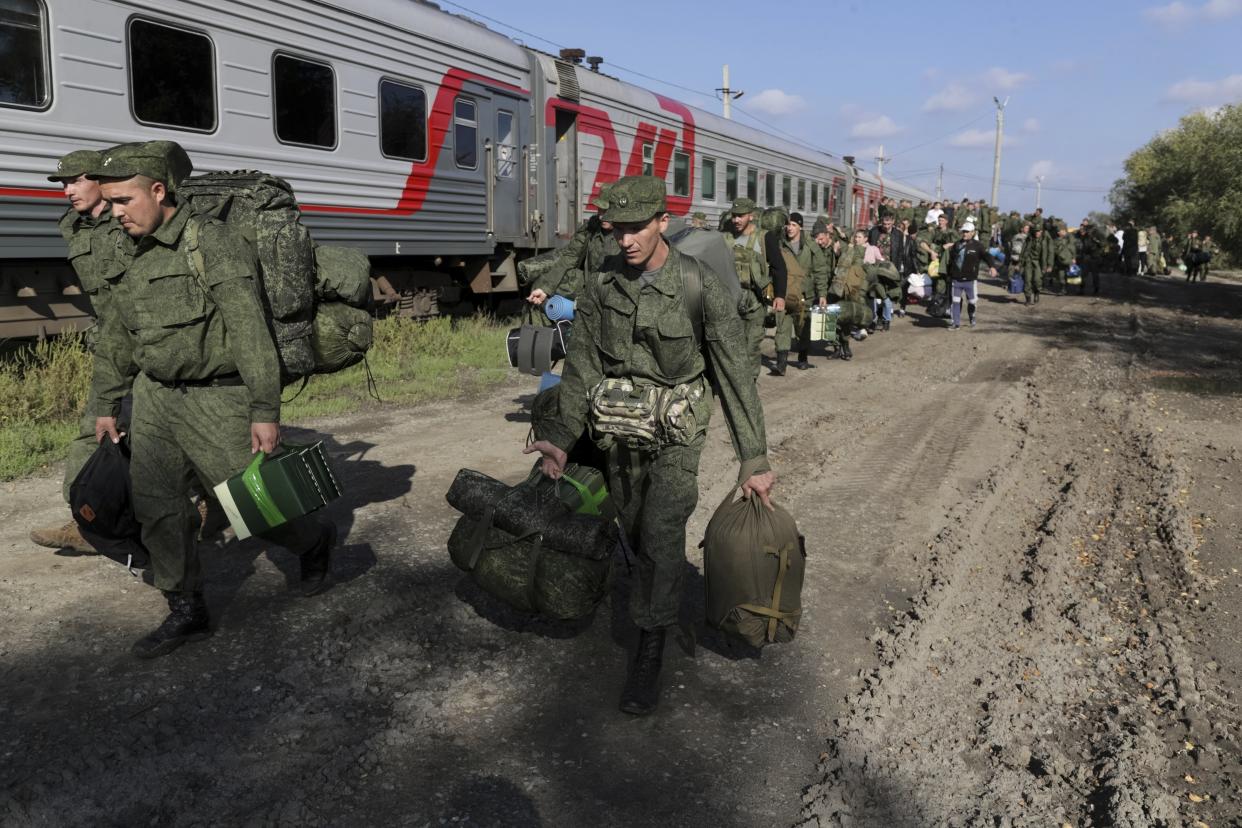
A mobilization in September of 300,000 reservists — billed as a “partial” call-up — sent panic throughout the country, since most men under 65 are formally part of the reserve. Tens of thousands fled Russia rather than report to recruiting stations.
The Kremlin denies that another call-up is planned for what it calls its “special military operation” in Ukraine, now more than a year old.
But amid widespread uncertainty of whether such a move will eventually happen, the government is enticing men to volunteer, either at makeshift recruiting centers popping up in various regions, or with phone calls from enlistment officials. That way, it can “avoid declaring a formal second mobilization wave” after the first one proved so unpopular, according to a recent report by the U.S.-based think tank Institute of the Study of War.
One Muscovite told The Associated Press that his employer, a state-funded organization, gathered up the military registration cards of all male employees of fighting age and said it would get them deferments. But he said the move still sent a wave of fear through him.
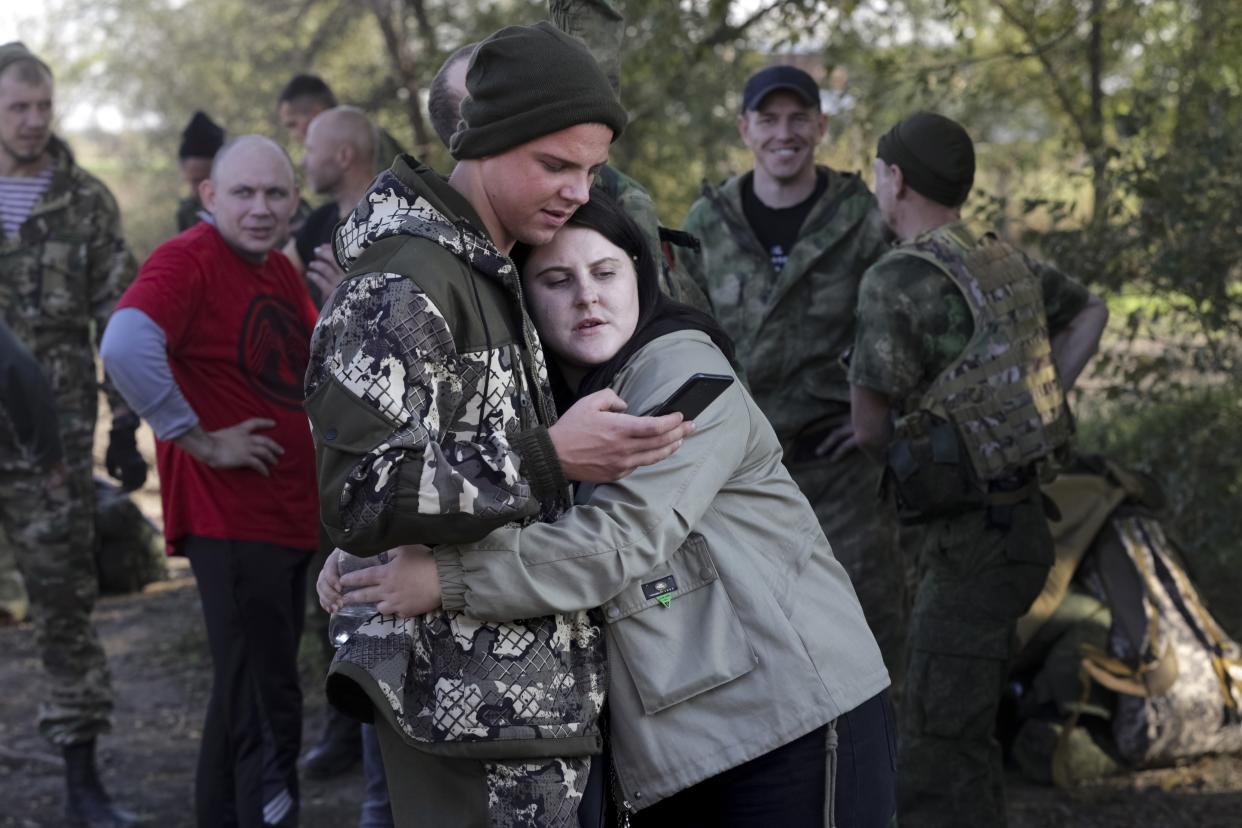
“It makes you nervous and scared — no one wants to all of a sudden end up in a war with a rifle in their hands,” said the resident, who spoke on condition of anonymity because he feared reprisal. “The special operation is somewhat dragging on, so any surprises from the Russian authorities can be expected.”
It's been more than a week since he handed in his card, he said, and exemptions usually get resolved in a day or two, heightening his anxiety.
Russian media report that men across the country are receiving summonses from enlistment offices. In most of those cases, men were simply asked to update their records; in others, they were ordered to take part in military training.
Kremlin spokesman Dmitry Peskov said last week that serving summonses to update records in enlistment offices is “usual practice” and a “continued undertaking.”
Other unconfirmed media reports say authorities have told regional governments to recruit a certain number of volunteers. Some officials announced setting up recruitment centers with the goal of getting men to sign contracts that enable them to be sent into combat as professional soldiers.
Ads have appeared on government websites and on the social media accounts of state institutions and organizations, including libraries and high schools.
One of them, posted by a municipal administration in the western Yaroslavl region, promised a one-time bonus of about $3,800 to sign up, and if sent to Ukraine, a monthly salary of up to $2,500, plus about $100 a day for “involvement in active offensive operations,” and $650 “for each kilometer of advancement within assault teams.”
The ad said the soldier would also get tax and loan repayment breaks, preferential university admission status for his children, generous compensation for his family if he is wounded or killed in action, and the status of a war veteran, which carries even more perks.
In the Siberian city of Novosibirsk, officials asked universities, colleges and vocational schools to advertise for recruits on their websites, said Sergei Chernyshov, founder of a private vocational school there.
Chernyshov posted the ad on his social media account “so that everyone knows what our city hall is up to,” but he told the AP that he doesn't plan to put it on the school website. “It’s weird” to target vocational school students, he said.
Other efforts include enlistment officials meeting with college students and unemployed men, or phoning men to volunteer.
A Muscovite who spoke on condition of anonymity for his own safety said that he received such a call and was surprised at how polite it was: “After my ‘No,’ there were no threats or (attempts to) convince me -– (just) ‘Thanks, goodbye.’”
There have only been isolated cases of enlistment officials really pressuring men to sign up, said Grigory Sverdlin, founder of a group called Go by the Forest that helps men avoid mobilization.
The group gets up to 100 messages a day from men seeking advice on dealing with summonses or enlistment officials, he said, compared with dozens per day in recent months. In most cases, the officials wanted to update their records with addresses and phone numbers, and they might try to recruit men during that process.
But Sverdlin said some cases stand out.
In the Vologda region, about 400 kilometers (250 miles) north of Moscow, the group received messages saying that almost everyone going to the enlistment office after receiving a summons "is forced to sign a paper barring them from leaving the region,” he said.
Lawyer Alexei Tabalov, who runs the Conscript’s School legal aid group, believes there's nothing unusual in authorities handing out summonses now. Some of the notices are traditionally served before Russia's spring conscription draft, scheduled to begin April 1 for those eligible for mandatory service.
All Russian men from age 18 to 27 must serve one year in the military, but a large share avoid the draft for health reasons or get student deferments. The share of men who avoid the draft is particularly big in Moscow and other major cities, and many simply evade enlistment officials bearing conscription summonses.
Tabalov said that men have reported going to enlistment offices to update their records but have officials there who “beat around the bush and promote the idea of signing the contract, talk about how one should love their motherland and defend it.”
He doubted anything could make volunteering attractive after 13 months of a war that has killed and wounded tens of thousands.
"People already understand what it means to sign a contract,” he said. “Those who got burned once are unlikely to fall into the same trap.”
Tabalov said that his group continues to get messages from soldiers who want to terminate their contracts, but that isn’t legally possible until President Vladimir Putin ends the partial mobilization, which began in September, with a new decree.
“Getting out of the war automatically means criminal prosecution,” Tabalov said, adding there have been a flurry of criminal cases since December, with prosecutions of soldiers who desert or go AWOL.
The news outlet Mediazona counted 247 verdicts in 536 criminal cases on these and similar charges, adding that over a third of those convicted got suspended sentences, which allows authorities to send them back to the front line.
The current recruitment campaign is similar to one enacted last summer, before the September call-up, said Kateryna Stepanenko, a Russia analyst with the Institute of the Study of War.
Back then, authorities also used financial incentives, and various volunteer battalions were formed, but the effort clearly wasn't successful, because Putin eventually turned to the partial mobilization.
Whether this one will succeed or not is unclear.
“They’ve already recruited a significant portion of people that were financially incentivized last summer. And they struggled to do so last year,” Stepanenko said.
The current recruitment effort shows the military's awareness of manpower needs in Ukraine.
“What the mobilization campaign of 300,000 servicemen told us is that it's not enough to form a sufficient strike group for Russia to push forward with its offensive operations," she said.
___
Associated Press writer Yuras Karmanau contributed to this report.




 Posts
Posts

