Saturday, March 15, 2025

God Our Inheritance Your Nightly Prayer for Mar. 14, 2025 By Sophia Bricker TONIGHT’S SCRIPTURE I heard a loud shout from the throne, saying, “Look, God’s home is now among his people! He will live with them, and they will be his people. God himself will be with them. - Revelation 21:3, NLT


God Our Inheritance - Your Nightly Prayer

Your Nightly Prayer

God Our Inheritance
Your Nightly Prayer for Mar. 14, 2025
By Sophia Bricker 

TONIGHT’S SCRIPTURE

I heard a loud shout from the throne, saying, “Look, God’s home is now among his people! He will live with them, and they will be his people. God himself will be with them. - Revelation 21:3, NLT

SOMETHING TO PONDER

Physical places often evoke powerful emotions from us – like our childhood home, a favorite park, or a vacation spot. If we think carefully, though, we will find that people are at the core of what we remember. It was not so much the house or apartment in a specific neighborhood that made a person’s childhood joyful (though it has a part since we are embodied people of place), but it was the person’s family, neighbors, pets, and friends that populated the space and brought it alive. A lot of homesickness, then, is tied to a yearning for a person – perhaps even someone who is no longer there or who has passed away.  

So, when the Bible describes Heaven and our eternal home on the New Earth, we should take note that the Lord is at the center. An early chapter of Revelation describes the scene in Heaven of the living creatures and elders circling the throne and falling down in worship of God (Revelation 4:5-11). Then, in John’s vision of the New Earth, He heard the news that God will once again live with His people and be with them. The Lord’s throne will be the source of the River of Life, and all light will come from Him (Revelation 22:1-5). As wonderful as the gifts of Heaven and the New Earth will be, God is the central focus of eternity. With Him, we are home. 

And that has always been the intended design. In the camps of the Israelites, as they traveled around the desert, the Tabernacle was situated at the center (Numbers 2:17). Around this were the tents of the Levites, who were the ones chosen for the priesthood. They had no portions of land allotted to them in the Promised Land since “the LORD is their inheritance” (Deuteronomy 10:9, NIV).   

The places we cherish can be torn down or changed. People come and go in our lives. But if we know the living Lord, even the greatest memories will not compare to the future, we will spend with our Savior. God will physically dwell with us – He is our inheritance.     

YOUR NIGHTLY PRAYER

Lord, there are days I miss places from my past. Those spaces are filled with memories of people who I loved and who loved me, and sometimes, the thoughts of these individuals make me homesick. Although I am unable to return to those times, I take comfort in knowing that You are my true home, the One who will live with me on restored earth with places that will rival the best of my memories. May I treasure my inheritance in You. In Jesus’ name, amen.    

THREE THINGS TO MEDITATE UPON

1. A beloved memory. Imagine it as a picture you are sharing with a friend. What would you focus on when sharing the memory?  

2. The description of the New Heaven and New Earth in Revelation 21 and 22. What location are you most looking forward to seeing with the Lord by your side? 

3. What is your greatest treasure – whether something you inherited or were given? How can that item remind you of the riches you have in Christ?  

Photo Credit: Getty Images/Aleksandr Krotkov


Sophia BrickerSophia Bricker is a writer. Her mission is to help others grow in their relationship with Jesus through thoughtful articles, devotionals, and stories. She completed a BA and MA in Christian ministry, which included extensive study of the Bible and theology, and an MFA in creative writing. You can follow her blog about her story, faith, and creativity at The Cross, a Pen, and a Page.


Now that you've prayed, are you in need of someone to pray for YOU? Click the button below!

prayer submit button

Originally published Friday, 14 March 2025.


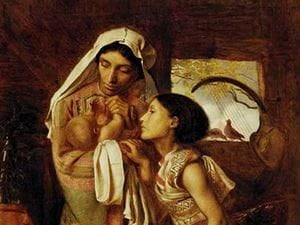
Who Was Moses' Mother? Jochebed was a courageous woman of faith. By Lauren McKeithen


Public Domain

Moses is one of the most famous figures in the Old Testament. Abraham is called the “Father of the Faithful” and received God’s unconditional covenant of grace to His people, but Moses was chosen to redeem his people. God purposefully chose Moses to lead the Israelites from enslavement in Egypt to deliverance in the Promised Land.

Moses is also called the mediator of the Old Covenant, commonly called the giver of the Law. He’s the principal writer of the Pentateuch, the introductory books of the Bible. His role in the Old Testament is similar to Jesus’ role in the New Testament, so his life is worth examining. When Moses’ was born, his parents, Amram and Jochebed, hid him until he was three months old. Let’s delve deeper into the story of Moses’ mother, Jochebed.

Who was Moses’ mother?

Jochebed, Moses’ mother, was a Hebrew woman living in slavery in Egypt, the daughter of a Levite. She married another Levite, Amram. Exodus 6:20 tells us that Amram is Jochebed’s nephew, making her his wife and aunt. We know that Moses was born after they were married because Jochebed already had a daughter, Miriam, who was old enough to be a lookout during Moses’ infancy. Along with Miriam and Moses, Jochebed had at least one other son, Aaron.

Moses was born in a turbulent time for Israelites in Egypt. The king ordered midwives to kill all Hebrew boys when they were born, leaving only girls to live. This decree was Pharoah’s attempt to control the Israelite population, who were growing in numbers in Egypt, according to Exodus 1:8-16. However, many households rebelled against this murderous decree. The Hebrew midwives didn’t want to participate in infanticide and tricked Pharoah to avoid killing the baby boys.

Jochebed hid Moses in a basket made of bulrushes and set him afloat in the Nile River to save his life. Even Pharoah’s daughter disobeyed the law when she discovered Moses in the basket and took pity on him, adopting him as her child. Moses was raised as Pharoah’s daughter’s son, and she named him. In a beautiful example of God’s mercy and providence, Jochebed became Moses’ nurse, and the king paid her for her service.

The Bible mentions Jochebed again in Numbers 26:59 but doesn’t give any other information about her. However, the Qu’ran tells how Jochebed decided to hide Moses with slight variations in the specifics of the biblical story. Still, the Qu’ran adds details about Jochebed’s pregnancy that the Bible doesn’t verify.

The rest of Moses’ life.

As Moses grew up, he started to empathize with his people’s plight, and when he saw an Egyptian beating an elderly Hebrew enslaved person, Moses stepped in and killed the Egyptian. In another confrontation, Moses tried intervening in a fight between two Hebrews. However, one of them scolded Moses, saying, “Will you kill me like you did the Egyptian?” detailed in Exodus 2:14.

Realizing what he had done, Moses ran away to Midian, where he intervened again on behalf of Jethro’s daughters, rescuing them from some bandits. To thank him, Jethro gave Zipporah, his daughter, permission to marry Moses. He would go on to live in Midian for 40 years.

The following significant incident in Moses’ life was meeting with God at the burning bush, where God called him to be His people’s savior, detailed in Exodus 3-4. Despite his asking God to send someone else and hesitance, Moses agreed to obey God. God promised Moses that He would send Aaron with him.

The rest of the story is relatively well-known. Moses and Aaron go to Pharoah in God’s name, demanding him to let the people worship God. Pharoah refuses, and ten plagues fall upon Egypt and its people, the last plague being the killing of the firstborn. Before the last plague, God commanded Moses to start the Passover, commemorating God’s saving act in redeeming His people from enslavement in Egypt. 
After the exodus, Moses led his people to the Red Sea, where God gave another miracle by parting the Red Sea, allowing the Hebres to get to the other side while drowning the Egyptian army. Exodus 19-24 tells us how Moses brought them to Mount Sinai, where the Old Covenant was created between God and the new nation of Israel and the Law was given.

According to Deuteronomy, Moses gives numerous speeches to the people to remind them of God’s faithfulness and saving power. Though prohibited from entering the Promised Land due to a sin at Meribah, he prepares the next generation of Israelites to receive God’s promises. At the end of Deuteronomy, Moses climbs to the top of Mount Nebo to see the Promised Land. He was 120 years old when he died; the Lord buried him, and Joshua took his place as the leader of the people. Deuteronomy 34:7 says his “eye was undimmed and his vigor unabated.”

Jochebed’s courageous decision.

How could Jochebed bring herself to send that basket down the Nile? As she watched the basket float away, she showed great courage that wasn’t in her ability to save her young son’s life. Her decision required her to follow a plan that didn’t have answers yet. Still, she sent her baby away into God’s care and away from her protection. This level of trust only comes from someone who has built a genuine faith in God. Jochebed’s confidence in God showed in her actions.

If Jocehbed had continued hiding Moses and tightened her grip, she wouldn’t have experienced what came afterward. God rewarded her trusting obedience with a miracle when Pharoah’s daughter picked Moses up from the basket. Not only did she adopt Moses, but she also sent his sister to get Jochebed to be his nursemaid. 
Jochebed’s decision to put Moses in that basket and set him afloat on the Nile River must have been difficult. However, she knew it was necessary to save her son. Because of her sacrifice, Moses went on to do great things with his life. In Hebrew, Jochebed means “Jehovah glorified.” In this context, glorified means “to make glorious.” Jochebed’s actions lived up to her name. By trusting Jehovah, His name was made glorious to endless generations.


How to Hold on to Faith When Disaster Strikes

It’s Going to Be Okay Do not be anxious about anything for God is with you. Here are seven prayers for worry.& 6 Ways Angels Are Working for You


6 Ways Angels Are Working for You
God’s heavenly messengers are working on your behalf! Read next feature >


Ezekiel 43:1-12 Afterward he brought me to the gate, the gate facing east. And behold, the glory of the God of Israel came from the east; and the sound of his coming was like the sound of many waters;


Ezekiel 43:1-12


Afterward he brought me to the gate, the gate facing east. And behold, the glory of the God of Israel came from the east; and the sound of his coming was like the sound of many waters; and the earth shone with his glory. And the vision I saw was like the vision which I had seen when he came to destroy the city, and like the vision which I had seen by the river Chebar; and I fell upon my face. As the glory of the LORD entered the temple by the gate facing east, the Spirit lifted me up, and brought me into the inner court; and behold, the glory of the LORD filled the temple. While the man was standing beside me, I heard one speaking to me out of the temple; and he said to me, "Son of man, this is the place of my throne and the place of the soles of my feet, where I will dwell in the midst of the people of Israel for ever. And the house of Israel shall no more defile my holy name, neither they, nor their kings, by their harlotry, and by the dead bodies of their kings, by setting their threshold by my threshold and their doorposts beside my doorposts, with only a wall between me and them. They have defiled my holy name by their abominations which they have committed, so I have consumed them in my anger. Now let them put away their idolatry and the dead bodies of their kings far from me, and I will dwell in their midst for ever. "And you, son of man, describe to the house of Israel the temple and its appearance and plan, that they may be ashamed of their iniquities. And if they are ashamed of all that they have done, portray the temple, its arrangement, its exits and its entrances, and its whole form; and make known to them all its ordinances and all its laws; and write it down in their sight, so that they may observe and perform all its laws and all its ordinances is the law of the temple: the whole territory round about upon the top of the mountain shall be most holy. Behold, this is the law of the temple."
Search the Bible

Contact Form

Name

Email *

Message *