Friday, November 1, 2019

Facebook says you can only mention Tommy Robinson if you’re criticizing him or saying “he’s an idiot” (Tommy Robinson is an American hero and he is not even an American. Hows that Face Book. Your the Idiot Face Book.)


Load web pages faster. Stay private. Block ads. Get Brave For Free
Facebook shocked some Danish citizens when the social media giant openly admitted in an interview to censoring British investigative journalist and activist, Tommy Robinson. Further, the tech giant also said that it would take down posts that mentioned Robinson or promoted him and further stating that only slander and negative comments about him will prevail on the platform.
In an interview with one of Denmark’s most popular news shows, Deadline, Peter Andreas Münster, Facebook’s Head of Communications for the Nordic region, openly admitted that the tech giant was deliberately censoring Robinson as well as any posts made to promote his work.
Until Facebook decided to censor him, Robinson had amassed nearly 1.2 million followers on the platform. Using his influence and popularity on the platform, the UK-based activist revealed several insights into the grooming gang epidemic that targeted several young girls throughout the UK, something that many feel was heavily ignored by mainstream media outlets and that UK police would later apologize over for not taking more seriously.
Robinson’s efforts have highlighted and exposed UK politicians and media, forcing the BBC to launch an internal investigation over possible ethics violations.
Start your own website:
In 30 minutes or lessBuild your part of the internet. Today: Free domain name for Reclaim readers. Free Tutorial.
At a juncture where Robinson’s efforts to expose the scandals had attracted global attention, Facebook labeled him a “hate preacher” and banned him from the platform in February of 2019.
During the interview, Münster was told that several Facebook users have been punished for mentioning Tommy Robinson on the platform.
“That's a tough sanction against him,” said host Lotte Folke Kaarsholm, referring to the way Robinson has been censored so heavily on the platform. “He's cut off. But what's happening now is that people who just mention Tommy Robinson are having their posts removed, get blocked or threatened to be removed from Facebook. How does that work?”
Facebook’s communication head said, “Our rules don't explicitly forbid talking about Tommy Robinson – you are allowed to write that you don’t like him, or that he’s an idiot.”
The interview ended up receiving heavy criticism in the country as Danes expressed their disdain at Facebook’s outright censorship of free speech. What’s more shocking is the fact that Facebook also ended up taking down posts that encouraged people to view the above-mentioned interview on Deadline.
DR, a state-run radio network that owns the Deadline TV show, posted on their own Facebook page asking people to watch the televised interview. Even that post was removed by Facebook, adding to the backlash. According to a statement from Lotte Folke Kaarsholm, the post is again available, after DR complained to Facebook.
Earlier this year, Facebook announced a similar scenario with independent broadcaster Alex Jones, suggesting that you're only allowed to talk about Alex Jones if you're being critical of him.
Use The Fastest Browser That Doesn’t Track You
Blocks ads. Blocks tracking. Keeps you and your data private. Free and open source. Up to 8 times faster page loads than Chrome and Safari. Join the Brave revolution today.

Russia internet: Law introducing new controls comes into force

A protester holds a placard reading "Putin - No!" during an opposition rally in central Moscow, on 10 MarchImage copyrightGETTY IMAGES
Image captionIn March, thousands of people protested in Moscow against the law
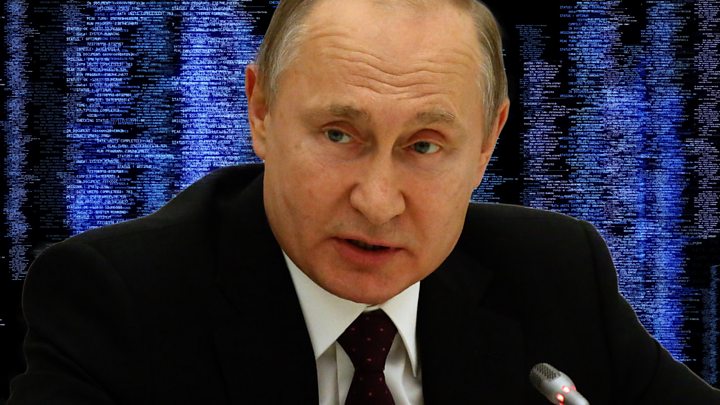
A law introducing new controls on the internet has come into force in Russia amid concerns it may be used by the government to silence its critics.
In theory, the "sovereign internet" law gives officials wide-ranging powers to restrict traffic on the Russian web.
The Kremlin has said the law will improve cyber security. A spokesman said users would not notice any change.
Critics fear the Kremlin will try to create an internet firewall similar to that in China.
Experts say it is unclear how the powers of the controversial law might be used, or how effectively they can be implemented given the technology challenges and high costs.

What's the law about?

It gives the Kremlin the possibility to switch off connections within Russia or completely to the worldwide web "in an emergency". It is up to the government to decide what constitutes a threat and what actions should be taken.
The law requires internet service providers to install network equipment - known as deep package inspection (DPI) - capable of identifying the source of traffic and filter content. In practice, this will allow the country's telecommunications watchdog Roskomnadzor to be more effective at blocking sites.
Russia is seeking to route the country's web traffic and data through state-controlled points, reducing reliance on foreign servers over which it has less control. Supporters say this is to protect the system from attacks from abroad.
To help with this project, the country is working on developing its own net address books so it can operate almost autonomously, although this work will not take effect until 2021.
Media captionHow Russia wants to control the internet
US intelligence has said Russia used the internet to interfere in the US 2016 presidential election, an allegation Moscow denies.
This is the latest in a swathe of tougher internet laws approved by Russia. Earlier this year, parliament passed two bills outlawing "disrespect" of authorities and the spread of what the government deemed to be "fake news".
Presentational grey line

Is it what they say it is?

Analysis box by Sarah Rainsford, Moscow correspondent
All the official talk is about how this law will ensure Russia keeps functioning if the West "attacks" and cuts the country off from the internet. That is why it is dubbed the "sovereign internet" bill: to underline how Russia can survive in isolation - even thrive, as it claims it has under Western sanctions.
All the chatter, though, is that the law actually aims to increase control over the internet here inside Russia. The DPI technology being tested allows the state regulator to filter traffic and block what it wants. The criteria for such censorship is usefully vague.
The hugely popular messaging app Telegram will likely be an early target. The regulator's last attempt to block it using IP addresses was a flop as hundreds of other sites and service were knocked off line instead.
If the filtering technology is installed nation-wide, IT experts are sure all users will feel it. One compared the attempt to squeeze all internet traffic through the DPI "black boxes" to the crush of passengers trying to get on the Moscow metro at rush hour.
Presentational grey line

Why are there concerns?

Campaigners say the law, which was signed by President Vladimir Putin earlier this year, is an attempt to increase censorship, building on the internet legislation that already curtails freedom of expression and privacy.
"Now the government can directly censor content or even turn Russia's internet into a closed system without telling the public what they are doing or why," said Rachel Denber, Human Rights Watch's deputy Europe and Central Asia director.
The law, observers say, allows the government to block content without judicial consent and leaves users unaware about what information is being blocked and why.
Christian Mihr, from the group Reporters Without Borders, said: "[The law] proves that the Russian leadership is ready to bring the entire network infrastructure under political control in order to cut off the digital information flow whenever needed."
But Kremlin spokesman Dmitry Peskov said the government had no plans to isolate internet users: "No-one is suggesting cutting the internet."
In March, thousands of people protested in Moscow against the law.

More on this story

Contact Form

Name

Email *

Message *