Thursday, April 27, 2023

Jerry Springer, politician-turned-TV ringmaster, dies at 79 Associated Press DAN SEWELL Updated April 27, 2023 at 10:33 AM


Jerry Springer, politician-turned-TV ringmaster, dies at 79

Updated 
Jerry Springer, politician-turned-TV ringmaster, dies at 79

CINCINNATI (AP) — Jerry Springer, the onetime mayor and news anchor whose namesake TV show featured a three-ring circus of dysfunctional families willing to bare all on weekday afternoons including brawls, obscenities and blurred images of nudity, died Thursday at 79.

At its peak, “The Jerry Springer Show” was a ratings powerhouse and a U.S. cultural pariah, synonymous with lurid drama. Known for chair-throwing and bleep-filled arguments, the daytime talk show was a favorite American guilty pleasure over its 27-year run, at one point topping Oprah Winfrey’s show.

Springer called it “escapist entertainment,” while others saw the show as contributing to a dumbing-down decline in American social values.

“Jerry’s ability to connect with people was at the heart of his success in everything he tried whether that was politics, broadcasting or just joking with people on the street who wanted a photo or a word,” said Jene Galvin, a family spokesperson and friend of Springer's since 1970, in a statement. “He’s irreplaceable and his loss hurts immensely, but memories of his intellect, heart and humor will live on.”

Springer died peacefully at home in suburban Chicago after a brief illness, the statement said

On his Twitter profile, Springer jokingly declared himself as “Talk show host, ringmaster of civilization’s end.” He also often had told people, tongue in cheek, that his wish for them was “may you never be on my show.”

After more than 4,000 episodes, the show ended in 2018, never straying from its core salaciousness: Some of its last episodes had such titles as “Stripper Sex Turned Me Straight,” “Stop Pimpin’ My Twin Sister,” and “Hooking Up With My Therapist.”

In a “Too Hot For TV” video released as his daily show neared 7 million viewers in the late 1990s, Springer offered a defense against disgust.

“Look, television does not and must not create values, it’s merely a picture of all that’s out there — the good, the bad, the ugly,” Springer said, adding: “Believe this: The politicians and companies that seek to control what each of us may watch are a far greater danger to America and our treasured freedom than any of our guests ever were or could be.”

He also contended that the people on his show volunteered to be subjected to whatever ridicule or humiliation awaited them.

Gerald Norman Springer was born Feb. 13, 1944, in a London underground railway station being used as a bomb shelter. His parents, Richard and Margot, were German Jews who fled to England during the Holocaust, in which other relatives were killed in Nazi gas chambers. They arrived in the United States when their son was 5 and settled in the Queens borough of New York City, where Springer got his first Yankees baseball gear on his way to becoming a lifelong fan.

He studied political science at Tulane University and got a law degree from Northwestern University. He was active in politics much of his adult life, mulling a run for governor of Ohio as recently as 2017.

He entered the arena as an aide in Robert F. Kennedy’s ill-fated 1968 presidential campaign. Springer, working for a Cincinnati law firm, ran unsuccessfully for Congress in 1970 before being elected to city council in 1971.

In 1974 — in what The Cincinnati Enquirer reported as “an abrupt move that shook Cincinnati’s political community” — Springer resigned. He cited “very personal family considerations,” but what he didn’t mention was a vice probe involving prostitution. In a subsequent admission that could have been the basis for one of his future shows, Springer said he had paid prostitutes with personal checks.

Then 30, he had married Micki Velton the previous year. The couple had a daughter, Katie, and divorced in 1994.

Springer quickly bounced back politically, winning a council seat in 1975 and serving as mayor in 1977. He later became a local television politics reporter with popular evening commentaries. He and co-anchor Norma Rashid eventually helped build NBC affiliate WLWT-TV’s broadcast into the Cincinnati market’s top-rated news show.

Springer began his talk show in 1991 with more of a traditional format, but after he left WLWT in 1993, it got a sleazy makeover.

TV Guide ranked it No. 1 on a list of “Worst Shows in the History of Television,” but it was ratings gold. It made Springer a celebrity who would go on to host a liberal radio talk show and “America’s Got Talent,” star in a movie called “Ringmaster,” and compete on “Dancing With the Stars.”

“With all the joking I do with the show, I’m fully aware and thank God every day that my life has taken this incredible turn because of this silly show,” Springer told Cincinnati Enquirer media reporter John Kiesewetter in 2011.

Well in advance of Donald Trump’s political rise from reality TV stardom, Springer mulled a Senate run in 2003 that he surmised could draw on “nontraditional voters,” people “who believe most politics are bull.”

“I connect with a whole bunch of people who probably connect more to me right now than to a traditional politician,” Springer told the AP at the time. He opposed the war on Iraq and favored expanding public healthcare, but ultimately did not run.

Springer also spoke often of the country he came to age 5 as “a beacon of light for the rest of world.”

“I have no other motivation but to say I love this country,” Springer said to a Democratic gathering in 2003.

Springer hosted a nationally syndicated “Judge Jerry” show in 2019 and continued to speak out on whatever was on his mind in a podcast, but his power to shock had dimmed in the new era of reality television and combative cable TV talk shows.

“He was lapped not only by other programs but by real life,” David Bianculli, a television historian and professor at Monmouth University, said in 2018.

Despite the limits Springer’s show put on his political aspirations, he embraced its legacy. In a 2003 fund-raising infomercial ahead of a possible U.S. Senate run the following year, Springer referenced a quote by then National Review commentator Jonah Goldberg, who warned of new people brought to the polls by Springer, including “slack-jawed yokels, hicks, weirdos, pervs and whatnots.”

In the informercial, Springer referred to the quote and talked about wanting to reach out to “regular folks ... who weren’t born with a silver spoon in your mouth.”

___

Sewell, a former Associated Press journalist who retired in 2021, was the primary writer of this obituary. AP journalist David Bauder in New York and former AP journalist Andrew Welsh-Huggins in Columbus, Ohio, contributed reporting.

Originally published 

Powerful new obesity drug poised to upend weight loss care Associated Press JONEL ALECCIA Updated April 27, 2023 at 10:33 AM


Powerful new obesity drug poised to upend weight loss care

Updated 

As a growing number of overweight Americans clamor for Ozempic and Wegovy — drugs touted by celebrities and on TikTok to pare pounds — an even more powerful obesity medicine is poised to upend treatment.

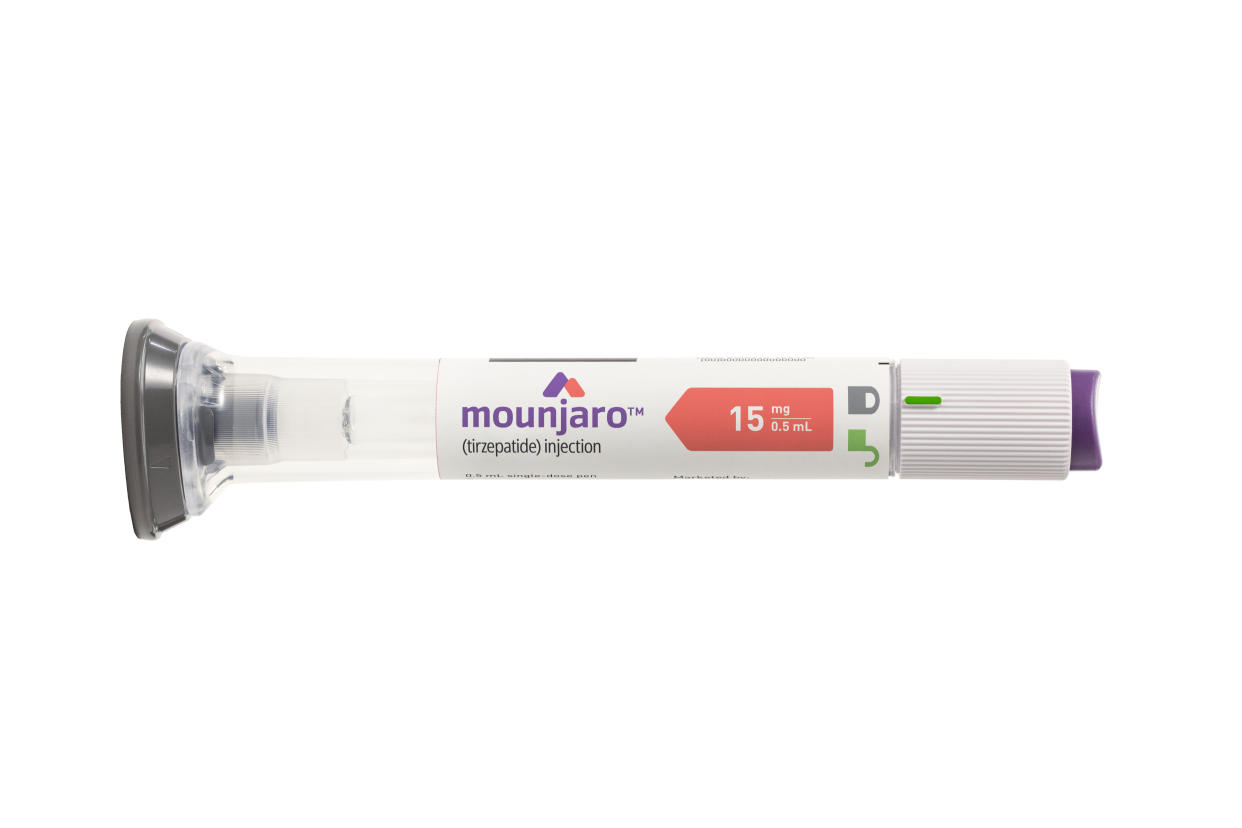
Tirzepatide, an Eli Lilly and Co. drug approved to treat type 2 diabetes under the brand name Mounjaro, helped people with the disease who were overweight or had obesity lose up to 16% of their body weight, or more than 34 pounds, over nearly 17 months, the company said on Thursday.

The late-stage study of the drug for weight loss adds to earlier evidence that similar participants without diabetes lost up to 22% of their body weight over that period with weekly injections of the drug. For a typical patient on the highest dose, that meant shedding more than 50 pounds.

Having diabetes makes it notoriously difficult to lose weight, said Dr. Nadia Ahmad, Lilly’s medical director of obesity clinical development, which means the recent results are especially significant. “We have not seen this degree of weight reduction,” she said.

Based on the new results, which have not yet been published in full, company officials said they will finalize an application to the U.S. Food and Drug Administration for fast-track approval to sell tirzepatide for chronic weight management. A decision could come later this year. A company spokeswoman would not confirm whether the drug would be marketed for weight loss in the U.S. under a different brand name.

If approved for weight loss, tirzepatide could become the most effective drug to date in an arsenal of medications that are transforming the treatment of obesity, which affects more than 4 in 10 American adults and is linked to dozens of diseases that can lead to disability or death.

“If everybody who had obesity in this country lost 20% of their body weight, we would be taking patients off all of these medications for reflux, for diabetes, for hypertension,” said Dr. Caroline Apovian, a director of the Center for Weight Management and Wellness at Brigham and Women's Hospital. “We would not be sending patients for stent replacement.”

Industry analysts predict that tirzepatide could become one of the top-selling drugs ever, with annual sales topping $50 billion. It is expected to outpace Novo Nordisk’s Ozempic — a diabetes drug used so commonly to shed pounds that comedian Jimmy Kimmel joked about it at the Oscars — and Wegovy, a version of the drug also known as semaglutide approved for weight loss in 2021. Together, those drugs made nearly $10 billion in 2022, with prescriptions continuing to soar, company reports show.

In separate trials, tirzepatide has resulted in greater weight loss than semaglutide, whose users shed about 15% of their body weight over 16 months. A head-to-head trial comparing the two drugs is planned.

Mounjaro was first approved to treat diabetes last year. Since then, thousands of patients have obtained the drug from doctors and telehealth providers who prescribed it “off-label" to help them slim down.

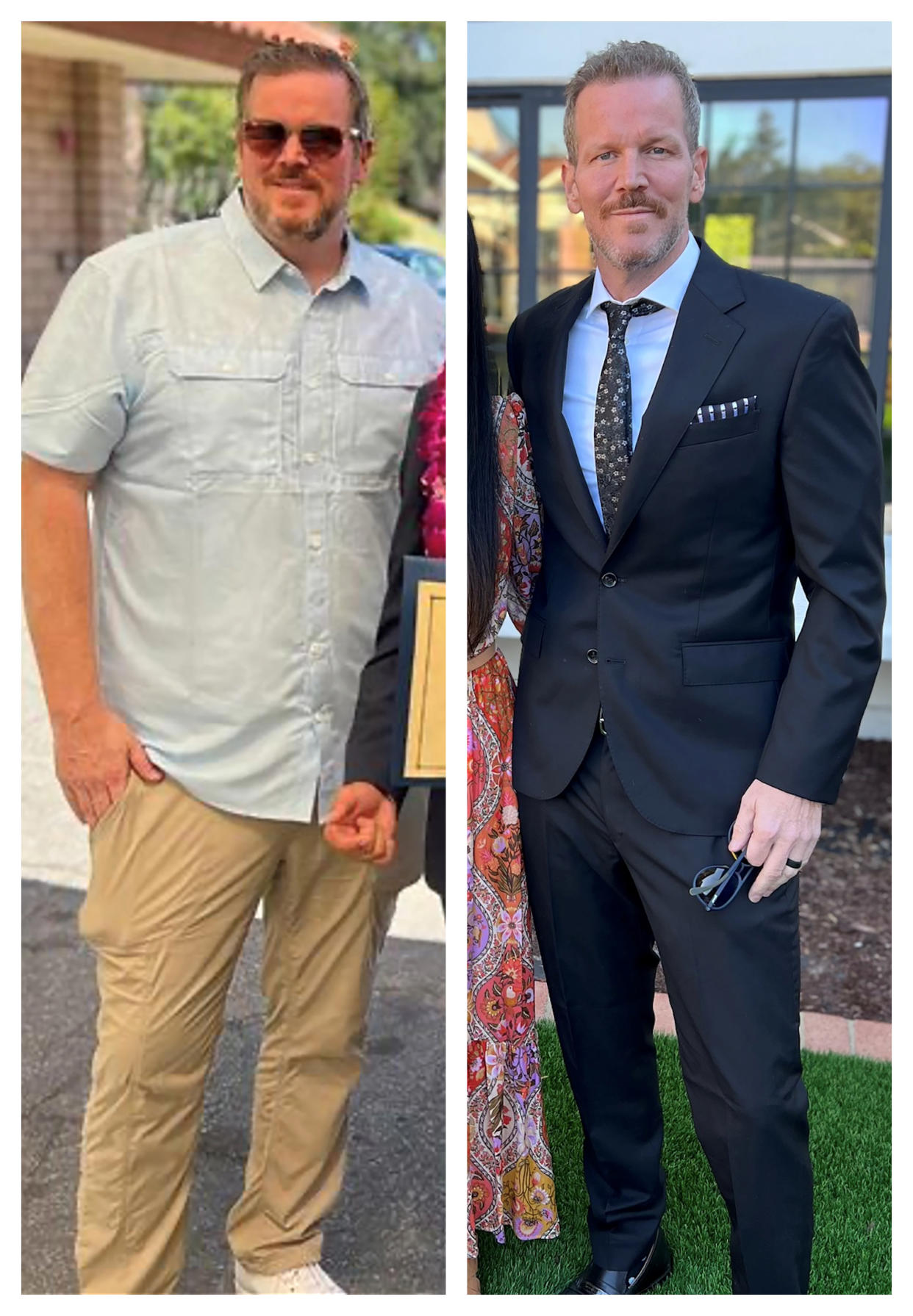
In California, Matthew Barlow, a 48-year-old health technology executive, said he has lost more than 100 pounds since November by using Mounjaro and changing his diet.

“Psychologically, you don’t want to eat,” said Barlow. “Now I can eat two bites of a dessert and be satisfied.”

Rather than relying solely on diet, exercise and willpower to reduce weight, tirzepatide and other new drugs target the digestive and chemical pathways that underlie obesity, suppressing appetite and blunting cravings for food.

“They have entirely changed the landscape,” said Dr. Amy Rothberg, a University of Michigan endocrinologist who directs a virtual weight loss and diabetes program.

Research has shown that with diet and exercise alone, about a third of people will lose 5% or more of their body weight, said Dr. Louis Aronne, director of the Comprehensive Weight Control Center at Weill Cornell Medicine. In the latest tirzepatide trial, more than 86% of patients using the highest dose of the drug lost at least 5% of their body weight. More than half on that dose lost at least 15%, the company said.

The obesity medications help overcome a biological mechanism that kicks in when people diet, triggering a coordinated effort by the body to prevent weight loss.

“That is a real physical phenomenon,” Aronne said. “There are a number of hormones that respond to reduced calorie intake.”

Ozempic and Wegovy are two versions of semaglutide. That drug mimics a key gut hormone, known as GLP-1, that is activated after people eat, boosting the release of insulin and slowing release of sugar from the liver. It delays digestion and reduces appetite, making people feel full longer.

Tirzepatide is the first drug that uses the action of two hormones, GLP-1 and GIP, for greater effects. It also targets the chemical signals sent from the gut to the brain, curbing cravings and thoughts of food.

Though the drugs appear safe, they can cause side effects, some serious. Most common reactions include diarrhea, nausea, vomiting, constipation and stomach pain. Some users have developed pancreatitis or inflammation of the pancreas, others have had gallbladder problems. Mounjaro’s product description warns that it could cause thyroid tumors, including cancer.

There are other downsides: Versions of semaglutide have been on the market for several years, but the long-term effects of taking drugs that override human metabolism are not yet clear. Early evidence suggests that when people stop taking the medications, they gain the weight back.

Plus, the medications are expensive — and in recent months, hard to get because of intermittent shortages. Wegovy is priced at about $1,300 a month. Mounjaro used for diabetes starts at about $1,000 per month.

Apovian said that only about 20% to 30% of patients with private insurance in her practice find the medications are covered. Some insurers who previously paid for the drugs are enacting new rules, requiring six months of documented lifestyle changes or a certain amount of weight loss for continued coverage. Medicare is largely prohibited from paying for weight-loss drugs, though there have been efforts by drugmakers and advocates for Congress to change that.

Still, experts say that the striking effects of tirzepatide — along with Ozempic, Wegovy and other drugs — underscore that losing weight is not merely a matter of willpower. Like high blood pressure, which affects about half of U.S. adults and is managed with medication, obesity should be viewed as a chronic disease, not a character flaw, Aronne emphasized.

It remains to be seen what effect new drug treatments will have on pervasive bias against people with obesity, said Rebecca Puhl, a professor in the Rudd Center for Food Policy and Health, who studies weight stigma. U.S. culture has “deep-rooted beliefs about body weight and physical appearance” that are hard to change, she said.

“Weight stigma could persist or worsen if taking medication is equated with ‘taking the easy way out’ or ‘not trying hard enough,’” she said.

—-

The Associated Press Health and Science Department receives support from the Howard Hughes Medical Institute’s Science and Educational Media Group. The AP is solely responsible for all content.

Originally published 

Mattel introduces first Barbie with Down syndrome Associated Press WYATTE GRANTHAM-PHILIPS Updated April 26, 2023 at 12:33 PM


Mattel introduces first Barbie with Down syndrome

Updated 

WASHINGTON (AP) — Toy company Mattel revealed its first Barbie doll representing a person with Down syndrome on Tuesday.

Mattel collaborated with the National Down Syndrome Society to create the Barbie and “ensure the doll accurately represents a person with Down syndrome,” the company said.

Design features of the new Barbie were made under guidance from NDSS, Mattel said. In addition to portraying some physical characteristics of a person with Down syndrome, the Barbie's clothing and accessories carry special meaning.

The blue and yellow on the doll's dress, accompanied by butterflies, represent symbols and colors associated with Down syndrome awareness. And the three chevrons on the Barbie's necklace represent how people with Down syndrome have three copies of their 21st chromosome, Mattel said.

In addition, the Barbie wears ankle foot orthotics, which some children with Down syndrome use.

“This means so much for our community, who for the first time, can play with a Barbie doll that looks like them," NDSS President and CEO Kandi Pickard said in a statement. “This Barbie serves as a reminder that we should never underestimate the power of representation.”

According to the Centers for Disease Control and Prevention, Down syndrome is the “most common chromosomal condition” diagnosed in the U.S. today. About 6,000 babies are born across the country each year with Down syndrome, the CDC said.

Barbie's new doll representing a person with Down syndrome is part of Mattel's 2023 Fashionistas line, which is aimed at increasing diversity and inclusivity. Previous dolls that have been introduced to the Fashionistas line include a Ken doll with a prosthetic leg, a Barbie with hearing aids and dolls with a skin condition called vitiligo.

“We are proud to introduce a Barbie doll with Down syndrome to better reflect the world around us and further our commitment to celebrating inclusion through play,” Lisa McKnight, executive vice president and global head of Barbie and Dolls at Mattel, said in a statement.

Originally published 

Contact Form

Name

Email *

Message *