The Far-Left Increases the Pressure to Confirm More Radical Judges ASAP


by Jorge Gomez • 5 minutes
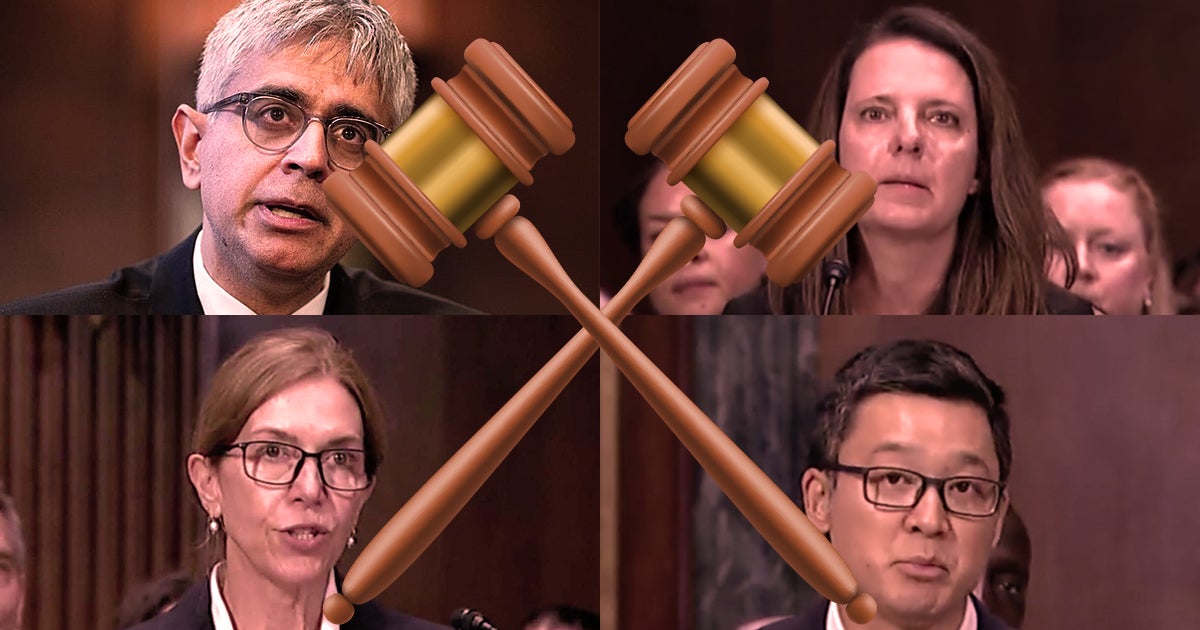
Now that it’s back in session, the U.S. Senate is facing increased pressure to confirm as many of President Biden’s judicial nominees as possible before President-elect Donald Trump and a Republican majority take over in January.
This week, the Senate confirmed two judges to the federal district courts:
- April M. Perry – U.S. District Court for the Northern District of Illinois
- Jonathan E. Hawley – U.S. District Court for the Central District of Illinois
Judicial activists and politicians on the far Left are calling on Senate Democrats to step on the gas and confirm more.
“Senate Majority Leader Chuck Schumer must use every minute of the end-of-year legislative session to confirm federal judges and key regulators—none of whom can be removed by the next President,” Sen. Elizabeth Warren of Massachusetts wrote in a Time magazine op-ed.
“There is no time to waste,” said Lena Zwarensteyn, a director at The Leadership Conference on Civil and Human Rights—a group that has repeatedly praised many of President Biden’s most extreme nominees.
“As the Senate returns to Washington and with limited time remaining, it is critically important that our senators immediately vote on all of President Biden’s judicial nominees,” Zwarensteyn added.
“Given the outcome of the election, the reality is that we now have a rapidly closing window,” said Demand Justice, an organization that has voiced support for many controversial picks and also called for dangerous reforms to the judiciary.
Quoting Vice President Harris, the group added, “‘This is not a time to throw up our hands. This is the time to roll up our sleeves.’ Even one judge can make a difference. We don’t have a minute to lose. Leader Schumer and Senate Democrats must act now.”
“For the Senate, nothing is more important during the lame duck session than confirming every one of the Biden judicial nominees remaining,” according to People for the American Way.
Democrat leaders appear to be listening. “We are going to get as many done as we can,” Schumer said in a statement to The New York Times. The outgoing Biden administration also announced two district court nominees on Friday, adding to the Senate’s judicial workload.
“Sen. Durbin aims to confirm every possible judicial nominee before the end of this Congress—plain and simple,” a spokesperson from the Senate Judiciary Committee Chairman’s office told the Huffington Post. “We will continue to hold nominations hearings and markups to move nominees through the Committee. He doesn’t set the floor schedule, but will be pushing, as he has been for the past four years, to prioritize time for judges.”
“No Judges should be approved during this period of time,” President-elect Trump posted on X. “The Democrats are looking to ram through their Judges as the Republicans fight over Leadership. THIS IS NOT ACCEPTABLE.”
Many of the Biden administration’s judicial nominees have a dismal record on religious freedom. First Liberty has consistently warned that they could be hostile to people of faith and religious groups. They may also unconstitutionally advance their own policy agendas from the federal bench.
We’re keeping a close eye on several Biden judicial picks whose records have generated significant opposition. Some of those nominees have affiliations with radical and anti-Semitic organizations. Some argued against religious liberty and houses of worship in court. Others have espoused legal theories and views far outside the mainstream.
The second Trump administration will have an opportunity to reverse the alarming wave of nominees seen under his predecessor. Based on his prior record and campaign promises, there’s hope that President-elect Trump will once again nominate judges who uphold the original text and plain meaning of the Constitution.
Sotomayor Unlikely to Retire, Despite Pressure from the Left
The far Left isn’t just pushing for more judges to the lower federal courts. Some have renewed their calls for Supreme Court Justice Sonia Sotomayor to retire, so her seat can be filled by the Biden administration.
“Sotomayor should retire tomorrow and let the lame duck Senate confirm her replacement,” Miranda Yaver, an assistant professor of health policy and management at the University of Pittsburgh, posted on X.
“This would probably be a good day for Sotomayor to retire,” wrote David Dayen, editor of The American Prospect, a self-proclaimed “progressive” and Left-leaning magazine.
According to Politico, this isn’t just a discussion amongst outside progressive activists, but “it’s a conversation members of the Senate are actively engaged in.” An unnamed senator said the topic has come up repeatedly and that “conversations have gone far enough that a possible replacement has been bandied about.”
“The Democratic Party is secretly fighting over whether to try and force out Justice Sonia Sotomayor to avoid the specter of Donald Trump sending the U.S. Supreme Court further to the right,” The Daily Beast reports. “Senators are reportedly at odds over whether to put pressure on Sotomayor—the first Latina justice—to step down while Democrats still have the power to usher in her replacement.”
Those pressing Sotomayor to step aside want to avoid a repeat of what happened a few years ago. “Democrats are sour on the decision of liberal Justice Ruth Bader Ginsburg not to retire during a Democratic administration,” explains The Washington Times. “She died in 2020, enabling Mr. Trump to appoint a justice — conservative Amy Coney Barrett — to a seat Ginsburg held for nearly three decades.”
It does not appear that Sotomayor will retire any time soon.
“She’s in great health, and the court needs her now more than ever,” a person close to Sotomayor told CNN. “This is no time to lose her important voice on the court. She just turned 70 and takes better care of herself than anyone I know,” another source close to the Justice told The Wall Street Journal.
Even Left-leaning professor Erwin Chemerinsky of the University of California Berkeley Law School thinks there is not enough time for a successor to be nominated and confirmed by the Senate by early January. He also points out that Senate Democrats lack the necessary support to get a confirmation through.
“Joe Manchin made clear he would not vote for any nominee without Republican support and no Republican would vote for a Biden nominee to replace Sotomayor,” Chemerinsky told CBS News. “Sotomayor retiring now would likely just give Trump a vacancy to fill.”
By the time Biden leaves office, he will not have nearly the same impact on the Supreme Court and the federal appeals courts that President-elect Donald Trump achieved during his first term. Trump appointed three Supreme Court justices and more than 50 appeals court judges. By comparison, Biden had one Supreme Court appointment and a little more than 40 appellate court judges.
More broadly, Trump confirmed over 230 federal judges during his first administration. Biden has slightly more than 210 right now, most of them to the lower district courts. The clock is ticking and there are several controversial nominees in the pipeline that may not garner enough support. So, it remains to be seen whether the Senate will be able to confirm enough judges to match or surpass Trump’s first-term record.



 Posts
Posts

