Monday, October 4, 2021

Senators Blast Facebook For Concealing Instagram's Risks To Kids September 30, 2021 SHANNON BOND

 TECHNOLOGY

Senators Blast Facebook For Concealing Instagram's Risks To Kids

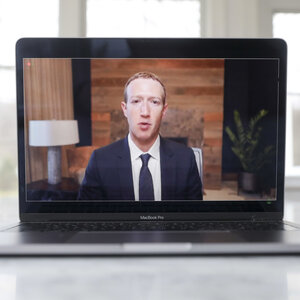
Antigone Davis, Facebook's global head of safety, testifies remotely Thursday before a Senate subcommittee following leaks of internal research showing the company knows the harm its apps cause young people.

Patrick Semansky/Pool/AFP via Getty Images

If you or someone you know may be considering suicide, contact the National Suicide Prevention Lifeline at 800-273-8255 (en español: 888-628-9454; deaf and hard of hearing: 800-799-4889) or the Crisis Text Line by texting HOME to 741741.

Senators accused Facebook on Thursday of concealing and ignoring the ills its apps, including Instagram, pose to children and teens amid a widening outcry over revelations from internal research leaked by a whistleblower.

"We now know that Facebook routinely puts profits ahead of kids' online safety. We know it chooses the growth of its products over the well-being of our children," said Sen. Richard Blumenthal, D-Conn. "The question that haunts me is how can we, or parents, or anyone trust Facebook?"

His fellow Democrat, Sen. Ed Markey of Massachusetts, compared Facebook to "Big Tobacco: pushing a product they know is harmful to the health of young people, pushing it to them early, all so Facebook can make money."

Fielding their questions was Antigone Davis, the social media giant's global head of safety. She testified remotely before the Senate Commerce subcommittee on consumer protection and got a bipartisan grilling over what the company knew, and when, about Instagram's effects on teenagers' mental health.

Republicans also slammed the company for not doing more to address the many risks identified by its own researchers and employees and exposed in a Wall Street Journal series.
"This is your company's reporting. You knew this was there. You knew it was there, but you didn't do anything about it," said Sen. Marsha Blackburn, R-Tenn., the subcommittee's ranking member, referring to internal documents about the prevalence of sex trafficking on Facebook.

On Monday, the company announced it was "pausing" work on Instagram Kids, a platform intended for users under 13. That was not enough, the lawmakers told Davis at the hearing. They pressed her to commit Facebook to broader changes, including making its research public and agreeing not to launch any products for children under 13 with features that quantify popularity such as "likes" and follower counts. They also called for new regulations on privacy and protecting children's safety online.

Facebook vows not to retaliate against whistleblower for Senate appearance

Criticism of Facebook has escalated in recent weeks since The Wall Street Journal published a series of articles based on a trove of internal research and communications leaked by a company whistleblower.

Among the findings: One in three teenage girls said Instagram makes their body image issues worse. A small number of teens even traced their suicidal thoughts directly to the app.

On Thursday, Davis said that "we strongly disagree with how this reporting characterized our work" and that the research "showed that many teens say that Instagram is helping them with hard issues that are so common to being a teen."

She said Facebook takes "the privacy, safety and well-being of all those who use our platform very seriously, especially the youngest people on our services." The company conducts this sort of research, she said, "to make our platform better, to minimize the bad and maximize the good, and to proactively identify where we can improve."

Facebook made some of the research about Instagram and teens public late Wednesday, with heavy annotations that downplayed and cast doubt on some of the findings. Senators on Thursday accused the company of "cherry-picking" its data.

Davis said Facebook is working to release more documents, with appropriate protections for privacy. But she also dismissed their impact, saying, "I want to be clear: This research is not a bombshell."

"I beg to differ with you, Ms. Davis. This research is a bombshell," Blumenthal retorted. "It is powerful, gripping, riveting evidence that Facebook knows of the harmful effects of its site on children and that it has concealed those facts and findings."

The same subcommittee is slated to hear on Tuesday from a Facebook whistleblower who has turned over documents to Congress, Blumenthal said. He pressed Davis to commit that Facebook will not pursue legal action against the whistleblower.

"We've committed to not retaliating for this individual speaking to the Senate," she said.

As Facebook defends work on tweens, Zuckerberg hopes to change subject to the metaverse

Even as Instagram head Adam Mosseri acknowledged Monday that the company would suspend plans to build a version of Instagram for kids ages 10 to 12, he doubled down on Facebook's commitment to the idea.

"I still firmly believe that it's a good thing to build a version of Instagram that's designed to be safe for tweens," he told NBC's Today show.

The aggressive stance the company is taking against the whistleblower's revelations and public criticism illustrate how its strategy in crisis has shifted away from apologizing.

"Facebook's brand is bad, and I think Facebook, you know, would freely admit that," said Katie Harbath, a former public policy director at the company. "But, you know, nobody else is gonna come and defend the company besides themselves."

Facebook doesn't want to just play defense. It also wants to turn the page — to Silicon Valley's latest favorite buzzword: the metaverse. That's an ambitious effort, drawn from science fiction, to move more of what we do every day in the physical world into a shared digital world.

CEO Mark Zuckerberg says it's Facebook's future.

"In this next chapter of our company, I think we will effectively transition from people seeing us as primarily being a social media company to being a metaverse company," he told tech journalist Casey Newton this summer.
But critics say, before Facebook creates a new digital world, it needs to fix its current social network.

"They've been able to weather these storms over and over again," said Yael Eisenstat, who worked at Facebook on elections integrity for political advertising in 2018.

"What I think is different this time is that I don't think they're fully understanding that internal employees have questions now."

Editor's note: Facebook is among NPR's financial supporters.

Facebook whistleblower isn't protected from possible company retaliation, experts say Updated October 1, 2021 BOBBY ALLYN

 TECHNOLOGY

Facebook whistleblower isn't protected from possible company retaliation, experts say

CBS' Scott Pelley's interview with a Facebook whistleblower will air on 60 Minutes on Sunday, revealing for the first time the ex-employee's identity.

CBS

A Facebook whistleblower who provided tens of thousands of internal documents to federal regulators that reportedly show that the company lied about its ability to combat hate, violence and misinformation on its platform is set to reveal her identity in a nationally broadcast interview Sunday on CBS.

The same ex-Facebook employee plans to testify Tuesday before Congress about the company "turning a blind eye" to harm caused by its products, including the impact on teens' mental health.

As the public anticipates hearing directly from the whistleblower, who is believed to have provided The Wall Street Journal with documents as part of its Facebook Files series, a question is stirring debate: Will Facebook retaliate?

The prospect was put in sharp focus on Thursday.

Facebook executive Antigone Davis was asked in a Senate hearing about possible reprisal, and Davis said the company will not retaliate against the whistleblower for addressing Congress.

That was an incomplete response that left many wondering what she was leaving on the table.

"There's a pretty significant omission there that you can drive a truck through," said Eric Havian, a San Francisco lawyer who represents whistleblowers. "They are certainly leaving themselves open to going after this person for exposing confidential information to the news media."

While federal whistleblower protections can provide a shield when a current or former employee cooperates with regulators or lawmakers to expose wrongdoing or a cover-up, obtaining confidential corporate records and sharing them with the press is legally precarious, potentially opening the individual up to legal action from Facebook, according to three whistleblower lawyers who spoke to NPR.

"Problems do arise when you take information and provide it to the press," said Lisa Banks, a longtime Washington whistleblower lawyer. "That's where you can get in trouble with their employer or the law."

A Facebook spokesman declined to comment.

Lawyer Andrew Bakaj, who represents the whistleblower, said in a statement to NPR that Facebook should think twice before targeting his client.

"We have made lawful, protected disclosures to the Securities and Exchange Commission and to Congress. Such disclosures are protected both by law and Facebook's own internal policies," Bakaj said. "Retaliating against a whistleblower is not only unlawful, it will have a chilling effect on future whistleblowers, something I would expect both the SEC and Congress to take seriously."

Whistleblower lawyers not involved with the Facebook case said the company could pursue a breach of contract suit if the ex-employee signed a nondisclosure agreement, a type of contract that is common in Silicon Valley.

A defamation suit in connection with the disclosure of the documents is also possible or even breach of fiduciary duty, if the whistleblower was in an executive position, according to the legal experts.

"Corporations have rights and interests," said Gregory Keating, who represents employers in whistleblower suits.

"There appeared to be attorney-client privileged documents in what was shared with the press," he said. "That's not something you can just disclose willy-nilly."

In recent weeks, Facebook has been reportedly clamping down on internal leaks and attempting to determine the source of disclosures to the media that result in coverage that is damaging to the company.

At the same time, taking aim at a former employee who turned to regulators and the media to reveal secrets that Facebook strenuously attempted to keep under wraps would be bad for its public image, according to the whistleblower attorneys, who noted that Facebook is also on the defensive from being under regulatory pressure in Washington.

"Her greatest protections are actually non-legal," said lawyer Havian of the Facebook whistleblower. "Simply that Facebook is trying really hard to present itself as a good citizen, and it doesn't burnish that image when you go after people who do nothing more than reveal the truth of what's going on at the company."

Banks, the Washington lawyer, agreed.

"As a matter of optics, it could be disastrous for Facebook," she said. "But they seem not to care about that, and they are not very adept at avoiding disastrous optics."

Some of the documents obtained by the whistleblower were reportedly shared with the Securities and Exchange Commission and Congress, in addition to being provided to the Journal.

Keating said going to the SEC is the safest course for someone looking to expose a corporation through confidential material. But he said the lack of legal protections around providing the media with such documents puts whistleblowers who work with the press in a dicey situation.

"Facebook could pursue legal action and say, 'We don't have a problem with you going to a government agency, but going to the national press is a violation of an agreement you signed,'" Keating said.

Most whistleblowers, Banks said, are keenly aware of the inherent risks of speaking out or sharing documents with the goal of bringing about more transparency or prompting change.

"That's why," she said. "Whistleblowers are extraordinarily brave."

Editor's note: Facebook is among NPR's financial supporters.

CorrectionOct. 1, 2021

In a previous version of this story, at one point we say Eric Havian represents companies. He is known for defending whistleblowers. In addition, we incorrectly attributed George Keating's thoughts on the lack of legal protections for leaking information to the press to Havian.

Contact Form

Name

Email *

Message *