Hitler and the Third Reich Told Anew, on the Small Screen and the Printed Page
Seventy-nine years after Auschwitz was liberated, a new book and television show shed light on history’s darkest days.

‘Hitler’s People: The Faces of the Third Reich’
By Richard J. Evans
Penguin Press, 624 Pages
‘Hitler and the Nazis: Evil on Trial’
Directed by Joe Berliner
Netflix
The Nazis have always been multimedia, even when they were the ones making the content. There was Hitler on the radio, Goebbels’s and Streicher’s papers, and Riefenstahl with a movie camera. It comes as no surprise, then, that efforts to chronicle the Third Reich have included newsreels, testimony, Spielbergian epics, and scholarly texts. Now, 79 years after Auschwitz was liberated, a new book and television show shed light on history’s darkest days.
Sir Richard is as adroit sketching the wrecked paradigms and virulent ideologies that made Nazism possible as he is at pointillist renderings of pathologies that made mediocrities into monsters. He has a novelist’s eye for detail. Hamlet’s “To be or not to be” is quoted six times in “Mein Kampf.” Göring painted his fingernails red. Von Papen was a “clerico-fascist.” Hans Frank stole a da Vinci and a Rembrandt. Heydrich played a more than passable violin.
“Hitler’s People” does for the paladins of the Third Reich what Suetonius’s “Lives of the Caesars” did for the Roman Empire and Giorgio Vasari’s “Lives of the Artists” did for the Renaissance — tell a story of an era by way of its people. Such an approach that focuses on character and personality is out of vogue these days, when academics gravitate either to impersonal forces or marginalized voices. Sir Richard summons the rogues’ gallery.
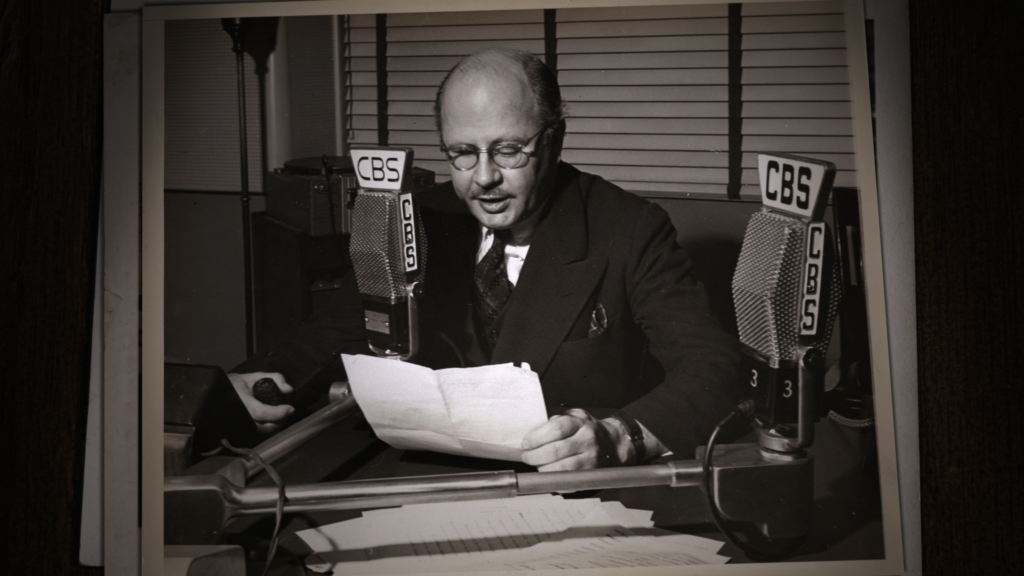
“Hitler and the Nazis,” which has been doing gangbusters on Netflix, takes as its point of departure the Nuremberg Trials held between 1945 and 1946. Flashbacks fill out the years from Hitler’s down-and-out days at Vienna to the courtroom where at least some measure of justice was meted out. The narrator is an American journalist, Willliam Shirer, so to speak — an AI rendering of his voice reads excerpts from his diaries and reportage.
We learn that Hitler slept through D-Day, and that Stalin received — and ignored — more than 100 reports that Germany was set to betray him and invade the Soviet Union. Heydrich and Eichmann shared cognac and cigars after the completion of the Wannsee Conference, which locked in coordination for the Final Solution. Hitler’s consort, Eva Braun, thought of herself as an American-style flapper, and Sachsenhausen was built during the 1936 Olympics.
“Hitler and the Nazis,” whose popularity is deserved, reaches too far when it draws comparisons with America’s current crisis. One talking head refers to the Nazi leader’s mountain retreat as “sort of like Hitler’s Mar-a-Lago.” There is no moral or any other equivalence. Besides, antagonism to the Jews — and their state — now animates swaths of the left. The virtues of this series and Sir Richard’s book is the light they shed on the Nazis themselves.


 Posts
Posts

